The Next Web |
- 2014 looks set to be the year that music streaming services make it big in Asia
- Report: Apple faces challenges in gaining smartphone sales market share from LG, Sony and Nokia
- Offline over the weekend? Read all the tech news you missed right here
- China’s Twitter-like Sina Weibo now lets you make payments via its iOS app
- Google partners with Audi, GM, Honda, Hyundai and Nvidia to take Android into cars
- No, it wasn’t aliens: Nvidia created a crop circle to market its new mobile processor
- LG announces the Lifeband Touch, a fitness tracker that pairs with iOS and Android devices
- Set-top box maker Roku announces its first smart TV, coming to stores this fall
- Nvidia unveils new processor to bring mobile computing to ‘the same level’ as desktops
- Lenovo unveils over 15 new devices, including convertible tablets and a carbon fiber ultrabook
| 2014 looks set to be the year that music streaming services make it big in Asia Posted: 06 Jan 2014 04:20 AM PST  Music streaming services are huge in the Western world. The industry is highly competitive — alongside smaller startups such as Pandora, Spotify, Rdio and Deezer, big Internet companies including Google, Apple and Microsoft have also jumped onto the bandwagon. Google has rolled out Google Play Music All Access, while Apple has its iTunes Radio service and Microsoft has developed Xbox Music. However, in Asia there is still a lot of space for music streaming to grow — and recently, the concept started getting into full gear as a handful of music streaming services already popular in the West made their way to Asia. In August 2012, Deezer started rolling out across Asia. In April 2013, Spotify first entered the continent with its launches in Hong Kong, Malaysia and Singapore, while in June, Rdio launched its service in Hong Kong and Malaysia, its first territories in Asia. After taking such baby steps in the last year, this may just be the year that music streaming services could finally take off properly in Asia — in particular Southeast Asia — as they boost their mobile offerings, ink deals with carriers and persuade users of the benefits of paying for high-quality music. A clearer mobile direction
First of all, music streaming services are making a stronger push toward mobile, which is something that will benefit them particularly in Asia. The region is undergoing a mobile revolution – roughly half of the world's mobile connections are now in Asia Pacific, with some 1.6 billion unique subscribers, according to a report last year from the GSM Association. This means many people who access the Internet for the first time are coming online via their mobile devices, and their leisure habits are in turn formed on mobile too. Spotify revealed late last year that its free service will now include mobile phones and tablets, though it will involve shuffle mode only on phones – so it will be a radio-like experience where you don't have full control over the order of play. There will also be ads included in the free service, as is the case with all of Spotify's free products. However, the huge step to offer its free service on mobile would likely attract many first-time users in Asia who want a taste of its service — and is the first mile in eventually converting them to paying users. Sunita Kaur, director for Asia at Spotify, tells us:
Deezer already made its mobile app available when it arrived in Asia — however, non-Premium+ subscribers can listen to all their music on mobile for 30 seconds only. If they want to play the full track, they have to pay. Given Spotify's recent move to offer something closer to its full service for free on mobile, this may spark a move on the part of other music streaming services to start boosting their mobile offerings, and could truly increase the adoption of these services in Asia. After all, listening to music on their mobile devices is a pertinent trend in Asia's largest country, China, with latest statistics pegging 285 million people in the country who listen to music while on the move, or 61.4 percent of total smartphone users. Kaur says: "We are huge music fans. When you think about the choices that we had… we didn't really have a lot of choice. When Spotify came into the market, number one it was a brand that people had heard about already, so the excitement of launching in Asia was there. And then the next step, we filled a void in the Asian market."
A push for carrier partnershipsCarrier partnerships are a strategic way to move forward in Asia, as music streaming services seek to gain more users without forcing them to pay. Basically, this means carriers pay the music streaming services — and they benefit as well by gaining an additional value-added service that will differentiate them from other carriers, essentially helping them attract new customers. Deezer has three such partnerships in Asia currently — with Digi in Malaysia, DTAC in Thailand and M1 in Singapore. How this works is that for example, postpaid M1 customers get unlimited music through Deezer, and an exclusive offer for the Premium+ service at just $5.99 per month up to a maximum subscription period of six months (usually priced at $9.90 a month). Spotify has arrangements with a range of operators in Europe — including Deutsche Telekom in Germany – and previously its Hong Kong-based regional head Sriram Krishnan had told TNW that it is open to working with Asian operators. In 2013, that finally came true when Spotify inked its first such deal in Asia, signing a deal with Maxis in Malaysia in October. This year seems to be the time when it will pick up its pace for signing more operator deals, considering it has landed on mobile for free finally. Eradicating piracy
Digital music sales are well established in most of Europe and the US, yet in Asia, many Internet users lack the means and awareness to buy music legally. Even in affluent Singapore, it was revealed in May 2012 that half of all Internet users accessed illegal download sites for free music and movies. However, governments in Asia have been increasing efforts to curb online piracy — Singapore, for one, was considering plans to block websites that offer pirated content. In the meantime, it was revealed in September last year that China was preparing to test payments for legal Internet music downloads. As societies band together to crack down on illegal music, legal music streaming services are set to become more popular in this part of the world, especially when markets typically drive the launches of such services — that is, when there is demand from the market, they will step in to plug the gap. As Kaur notes, for example, Spotify's lead for any market launch is their licensing and label relations. "So what happens is when all of the record labels, collective societies, publishing houses come together, and when we have a good robust local music catalogue, then we launch," she explains. Music streaming services to scale in Asia in 2014This year, therefore, bodes well for music streaming services in Asia as the foundations have all been laid. Whether or not they can truly take off in Asia probably depends a lot on the teams behind these services also bringing in more local music and adapting to the various languages in the region — which is what they have been working on already. After all, it won't be any surprise that the Chinese love listening to Chinese music, just as the Japanese probably prefer their own labels as well. Getting a critical mass of record labels and different kinds of music on board would likely boost its adoption among Asian music listeners, and carrier partnerships, along with a focus on mobile, will form an entire solid ecosystem for more growth in the region. Headline image via Kim Jae-Hwan/AFP/Getty Images, images via Getty Images, Getty Images and Getty Images This posting includes an audio/video/photo media file: Download Now |
| Report: Apple faces challenges in gaining smartphone sales market share from LG, Sony and Nokia Posted: 06 Jan 2014 03:54 AM PST Apple's share of smartphone sales continued to grow month on month for the three months to November 2013 following the release of its flagship iPhone 5s and the lower-cost 5c in September. However, despite the gains, its share in most major markets is lower than at the same time last year, according to data from Kantar Worldpanel ComTech.
Dominic Sunnebo, strategic insight director at Kantar, notes that "resurgent performances from LG, Sony and Nokia have made making year on year share gains increasingly challenging for Apple." For example, Windows Phone is now the third-largest operating system across Europe with a 10 percent market share, more than double that compared with last year — though its progress in the world's two largest smartphone markets remains stubbornly slow, with market share stuck at 4.7 percent in the US and 2.7 percent in China. In Japan though, Apple now accounts for a majority share of 69.1 percent. It takes 43.1 percent in the US, 35 percent in Australia and 30.6 percent in the UK — all slightly down compared to the same time last year. Thumbnail image via Mario Tama/AFP/Getty Images This posting includes an audio/video/photo media file: Download Now |
| Offline over the weekend? Read all the tech news you missed right here Posted: 06 Jan 2014 02:25 AM PST  The weekend, like New Year's eve, is a quickly fading and blurry memory. If you spent it offline recovering from the return to work, then you've missed all the tech news and features that happened while you weren't paying attention. Don't worry though, we were. So, make a coffee, sit back and catch up on all the tech news you missed from the last two days. News from The Next Web over the weekend:Good reads:
From beyond The Next Web:
Featured Image Credit – Getty Images This posting includes an audio/video/photo media file: Download Now |
| China’s Twitter-like Sina Weibo now lets you make payments via its iOS app Posted: 06 Jan 2014 01:05 AM PST  In 2013, wildly popular Chinese messaging service WeChat (users in China get a version known as Weixin) expanded its services and progressed toward becoming a platform — notably incorporating payment services. Now China's version of Twitter, Sina Weibo, is also taking the same route as it seeks to capture eyeballs and sustain its user growth. The latest update to Sina Weibo's iOS app (hat/tip Tech in Asia) has introduced a feature known as 'Weibo Payment,' — or termed 'Wallet' within the app, so "paying online is just a tap away."
However, there are no details yet as to how this would work yet, though it seems like this is a natural progression from Sina Weibo's link with e-commerce giant Alibaba.
Last year, the two teamed up to launch a "Weibo-Taobao" platform to make it easier for customers on Weibo to shop on e-commerce site Taobao. The collaboration basically allowed users to buy products directly on the Twitter-like microblogging platform. A new type of display for Taobao products was launched on Sina Weibo — a "name card" of sorts showing more details instead of just a link to the listing, including pricing, store credit rating, and the popularity of the product. To make it even more convenient to purchase products from Taobao directly on Sina Weibo, a "Buy" button on the virtual card was also released. It looks like the two companies are making it easier for users to click "Buy" directly within the Sina Weibo app, then move to pay right within the app as well. An Android app update is likely to be rolled out in the near future to add in this payment feature as well. Sina has experimented in the past with third-party payments. Chinese smartphone manufacturer Xiaomi's now infamous flash deal was conducted on Weibo using the then trial-only WeiboPay, and the company now has a 'Weibo Wallet' service — which could very likely be linked to the payment feature on Sina Weibo. Previously, Sina already admitted that it believes time spent on Weibo is down because of competition from rival Tencent's WeChat messaging service. It is therefore no surprise that the company wants to boost its app with other services as well — but WeChat has already taken a huge step forward in this and Weibo has much to catch up with, though its link with Alibaba will no doubt stand it in good stead. Headline image via Mark Ralston/AFP/Getty Images This posting includes an audio/video/photo media file: Download Now |
| Google partners with Audi, GM, Honda, Hyundai and Nvidia to take Android into cars Posted: 06 Jan 2014 12:32 AM PST  Last week we reported that Google was supposedly working to bring an Android-based system into cars. Well, the Internet giant has confirmed this in a blog post today. Google is teaming up with automotive behemoths Audi, GM, Honda, Hyundai and Nvidia to form the Open Automotive Alliance, or 'OAA', designed to "accelerate" innovation in the automotive sector. "In this multi-screen world, switching between our different devices should be easy and seamless," says Patrick Brady, Director, Android Engineering. "Common platforms allow for one connected experience across our phone, tablet and PC, so we get the right information at the right time, no matter what device we're using. But there's still an important device that isn't yet connected as seamlessly to the other screens in our lives – the car." Way back in 2010 we brought you news on the Roewe 350, which was touted as the world's first Android-equipped automobile. The car featured a DVD/GPS system that runs on Android 2.1 – at that time the latest release from Google. The system enabled drivers to gain access to real-time traffic reports, allowed direct Web access from the car and more. However, Android hasn't yet fully infiltrated automobiles the world over, so teaming up with these major players is a big move for Google and Android, as it looks to transcend your pocket and become a permanent fixture in your car. With the OAA, it should mean that all your music, apps and more will find a way onto your dashboard to use with the car's built-in controls and display. This will likely mean that hands-free controls will be a standard fixture, with drivers encouraged to keep their eyes on the road rather than messing around with buttons on their smartphone. "Together with our OAA partners, we're working to enable new forms of integration with Android devices, and adapting Android for the car to make driving safer, easier and more enjoyable for everyone," adds Brady. "Putting Android in the car will bring drivers apps and services they already know and love, while enabling automakers to more easily deliver cutting-edge technology to their customers." Though there are only five car manufacturers on board for now, Google says it's welcoming other companies to join the OAA in the future to help build "a common platform" for the road. Over and above all this, however, this is setting up a big battle for the roads, with Apple's iOS in the Car (iOSitC) also looking to make waves in 2014 and beyond. Apple has previously inked deals with a number of car manufacturers for Siri Eyes-Free mode, including General Motors, BMW, Toyota, Mercedes-Benz, Honda, Audi and Hyundai, which will ultimately let drivers interact with their iPhone using just their voice. Meanwhile, you can read more on the Open Automotive Alliance below. This posting includes an audio/video/photo media file: Download Now |
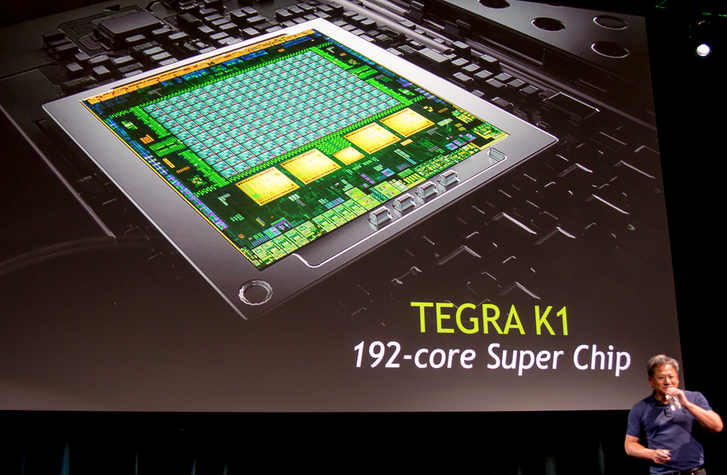
| No, it wasn’t aliens: Nvidia created a crop circle to market its new mobile processor Posted: 05 Jan 2014 11:23 PM PST Graphics technology company Nvidia took an interesting strategy to market its new Tegra K1 processor – it created a crop circle. "We simply couldn't think of any other way to explain that our new Tegra K1 processor, with 192 graphics cores, can do things no other technology — on this planet, at least — could," the company says, admitting that it is behind the stunt in Salinas, California. 192 is indeed the key number — it's spelled out in Braille in the center of the crop circle.
CEO Jen-Hsun Huang says the circle sparked considerable interest and media coverage, though, of course, Nvidia is only taking the credit for it now. Huang says it didn't cost a lot — but we expect future Nvidia marketing will be more direct and less extraterrestrial. Follow all of our CES 2014 coverage. This posting includes an audio/video/photo media file: Download Now |
| LG announces the Lifeband Touch, a fitness tracker that pairs with iOS and Android devices Posted: 05 Jan 2014 10:40 PM PST
The device is worn on the wrist and tracks a range of physical activity — including steps taken, distance covered — as well as calorie consumption. The Lifeband Touch pairs with iOS or Android devices using Bluetooth 4.0, and can be used to accept incoming calls and play/control music. There's no news on its price or release dates just yet, but the device will be shown off at CES so we'll bring you more details (including close-up pics) when we have them. LG showcased the Activity Tracker wristband at CES 2013, but it was never released. An image of the Lifeband Touch leaked out last week and, with LG already confirming it was creating a wearable, its arrival is no surprise. Follow all of our CES 2014 coverage. This posting includes an audio/video/photo media file: Download Now |
| Set-top box maker Roku announces its first smart TV, coming to stores this fall Posted: 05 Jan 2014 09:48 PM PST  Roku, the company behind a series of streaming TV, film, music and gaming boxes, has now stepped into the smart TV space. It announced the Roku TV today, which is touted as being much more straightforward than other smart TVs on the market — as the company which built itself on streaming devices brings all these technologies together into just one (huge) gadget, eliminating the need for any dongles. Instead of several layers and menus, the Roku TV gets a home screen that brings together all sources of content. It will only have 20 remote-controlled buttons — that's half the number that traditional TVs have. Furthermore, the Roku TV can be controlled via mobile devices by using the Roku iOS or Android app.    Just like Roku streaming players, users of the Roku TV will get full access to the Roku Channel Store with more than 31,000 movies and 1,200 channels. The company has partnered with TCL and Hisense first to roll out the Roku TV, and the models will be showcased at the Consumer Electronics Show later tonight. Roku has plans to license its design platform and software stack to manufacturers, so they can build and distribute Roku TV models. The first Roku TV models ranging from 32 to 55 inches will be available in major retail stores starting this fall. Follow all of our CES 2014 coverage. This posting includes an audio/video/photo media file: Download Now |
| Nvidia unveils new processor to bring mobile computing to ‘the same level’ as desktops Posted: 05 Jan 2014 08:53 PM PST
Speaking at a company press event at CES in Las Vegas on Sunday, CEO Jen-Hsun Huang said the new Tegra K1 mobile processor — which features 192 cores — has "brought mobile computing to the same level as desktop computing." Machines running on Tegra K1 will support Epic Games' Unreal Engine 4, meaning that some of the world's premier PC and console games will be capable of extending to mobile devices. Tim Sweeney, CEO of Epic Games, lauded Nvidia for making this technology available today, saying that he anticipated it would take at least another four years. That's not quite all, since the Tegra K1 is also designed for 4K TV sets, game consoles, cars and more. The new processor replaces the Tegra 4, which was unveiled last year. Follow all of our CES 2014 coverage. Image via Pocketlint This posting includes an audio/video/photo media file: Download Now |
| Lenovo unveils over 15 new devices, including convertible tablets and a carbon fiber ultrabook Posted: 05 Jan 2014 07:19 PM PST  Lenovo is expanding its range of Think and multimode devices, which will be showcased at the Consumer Electronics Show (CES) in Las Vegas this week. The company has given us a first glimpse of the more than 15 products to be announced over the next few days, and here are a few that have caught our eye. A 'virtually indestructible' lightweight ultrabookLenovo is taking the wraps off its third generation ThinkPad X1 Carbon, claimed to be the world's lightest 14 inch ultrabook. It weighs only 2.8 pounds (about 1.27 kg) and Lenovo touts it as "virtually indestructible." The X1 Carbon is made from carbon fiber, the same material used to build aircrafts and racing cars.
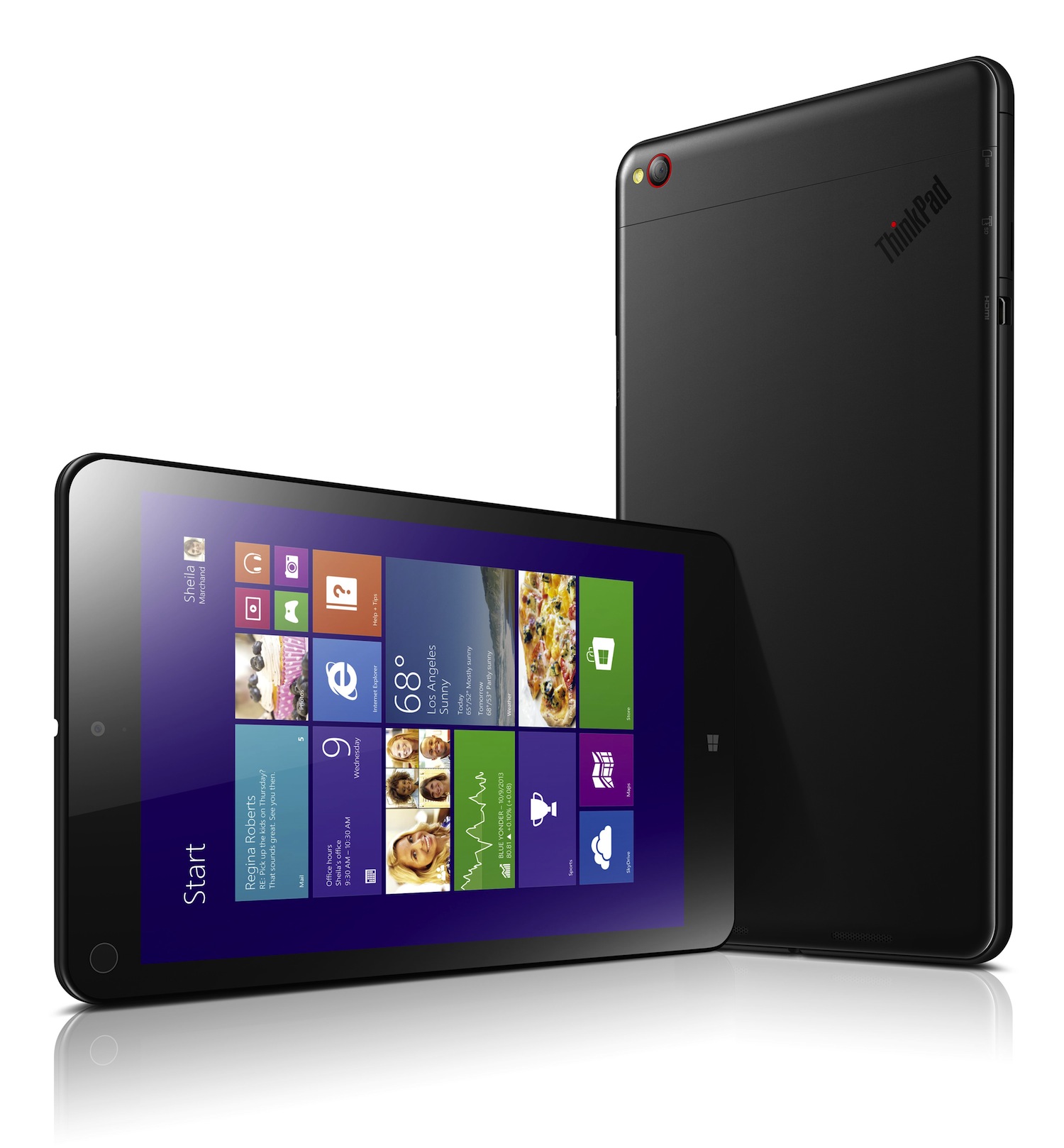
The latest iteration of the X1 Carbon comes with an adaptive keyboard, and has integrated voice and gesture control. It also features improved viewing and touch experiences — with a display that provides sharper and brighter images at higher resolutions with better viewing angles. Prices for various models of the ThinkPad X1 Carbon start at $1,299 and it will be made available starting late January. The Thinkpad 8, an 8-inch business tabletThe Thinkpad 8 is an 8-inch tablet made of machine-cut aluminum, which Lenovo touts as catering to those who want a portable device that can connect to a keyboard and display for a full PC experience. It comes in three modes: the 'Tablet Mode' for those who want to use it on the go, the 'Desktop Mode' after it's connected to the optional keyboard base, dock or monitor, as well as the 'Tent Mode' if users flip the optional Quickshot Cover over the tablet. The ThinkPad 8 is powered by an Intel Bay Trail quad-core processor, comes with up to 128GB of storage, a micro-USB 3.0 port, LTE connectivity, as well as a full Windows 8 Pro experience.
Prices for the ThinkPad 8 convertible tablet start at $399, and will go on sale in late January. New Lenovo consumer laptops and desktopsLenovo is revealing three new additions to its consumer line of laptops and desktops. The new clamshell 14-inch Y40 and and 15.6-inch Y50 laptops focus on multimedia technologies such as the latest graphics options and audio features, while the 14-inch Z40 and 15.6-inch Z50 laptops emphasize different colors, as well as facial recognition and motion and voice control.
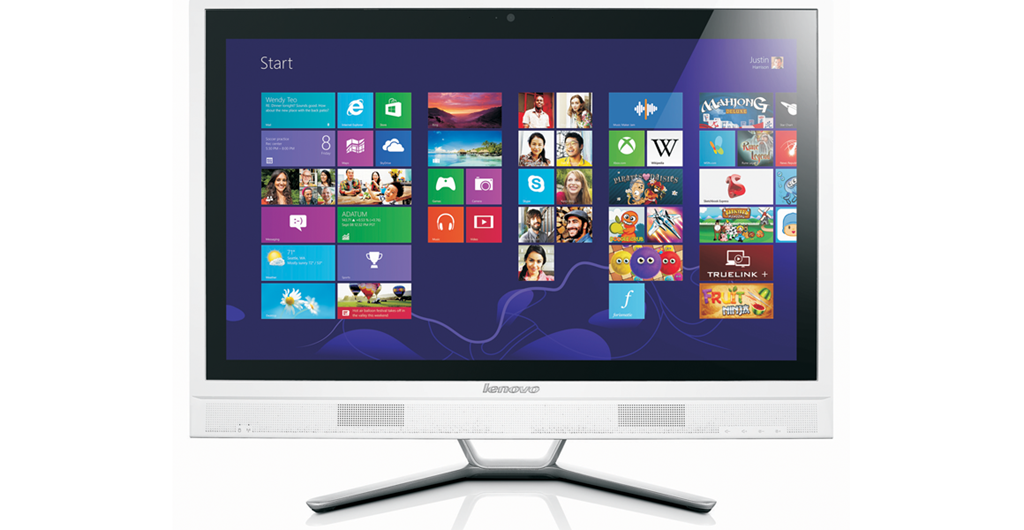
The Y40 and Y50 laptops start at $999 and will be available from May 2014, while the Z40 and Z50 laptops start at $599 and will go on sale in March 2014. The C560 all-in-one is a 23-inch Windows 8.1 home PC, which has a full HD 1920×1080 optional multitouch display. It runs on a fourth-generation Intel Core processor and comes with NVIDIA graphics, as well as Dolby Advanced Audio, making it a desktop suitable for watching movies or playing games.
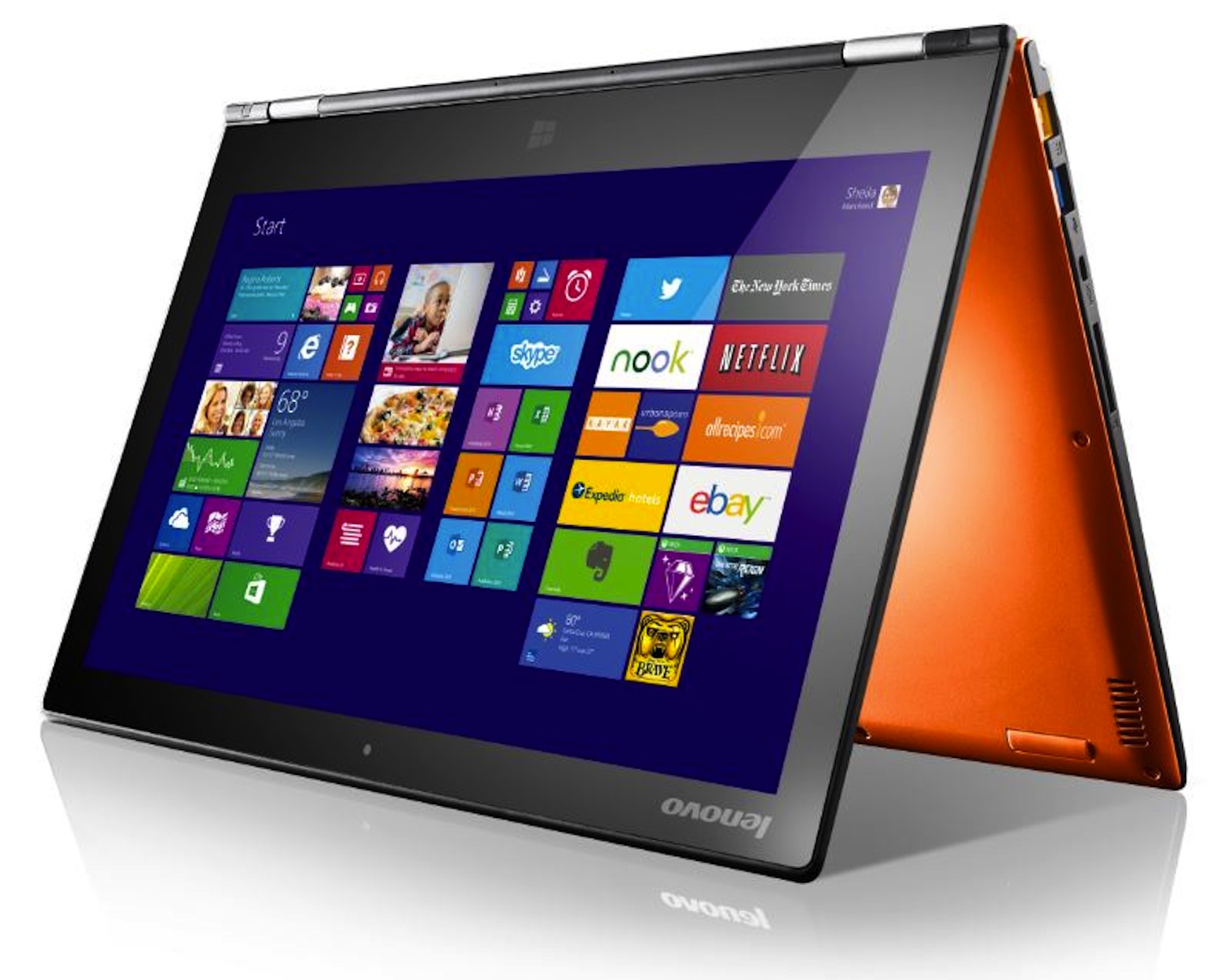
Models of the touchscreen C560 AIO start at $659 and will be available from February 2014. More convertible and detachable devicesLenovo's first multimode tablet, the Yoga Tablet, was unveiled in October last year. It straddles the PC-meets-tablet market position that Microsoft, among others, is focused on with its Surface tablet. Lenovo tried to differentiate the Yoga Tablet's design, letting users handle it in three ways — 'hold', 'tilt' and 'stand' — thanks to a cylindrical handle that rotates and can be used as a stand and a handle when the device is held in portrait mode. The company has just announced Yoga 2 — an 11-inch model retailing at $529 from January, which measures just 0.67 inches, weighs about 1.3 kilograms and is powered by a quad-core Intel Pentium processor. There is also another 13-inch model going for $999 which features a full HD display, and will go on sale in February.
MIIX 2 is a detachable three-mode laptop — users can take only the touchscreen tablet when they're on the go, then use the 'Laptop Mode' by connecting back to the base for a full Windows 8.1 laptop experience with a full-size keyboard. They can also engage MIIX 2′s 'Stand Mode' by turning the tablet 180 degrees and inserting it into the keyboard base, which is useful for watching movies or viewing photos. The 10-inch MIIX 2 measure just 0.36-inches in terms of thickness and weighs just 1.3 pounds (0.6 kg), while the 11-inch model focuses on higher performance by incorporating a fourth-generation Intel Core processor, and up to 256GB of fast solid state drive storage.
Prices for the Lenovo MIIX 2 start at $499 for the 10-inch model and $699 for the 11-inch model. The former will be available beginning in March, while the latter will go on sale starting in April. Follow all of our CES 2014 coverage. Headline image via Peter Parks/AFP/Getty Images This posting includes an audio/video/photo media file: Download Now |









| You are subscribed to email updates from The Next Web To stop receiving these emails, you may unsubscribe now. | Email delivery powered by Google |
| Google Inc., 20 West Kinzie, Chicago IL USA 60610 | |


