The Next Web |
- Nest CEO Tony Fadell vows to make any privacy policy changes transparent and opt-in
- Jimmy Wales takes his Wikipedia learnings to the mobile industry as Co-Chair of The People’s Operator
- Chinese search giant Baidu’s translation app now recognizes and translates images
- Offline over the weekend? Read all the tech news you missed right here
- Kim Dotcom gives a sneak preview of Baboom, his new music streaming service
- Spotify now lets all artists list merchandise on its music streaming service
- Chinese search giant Baidu offers more entertainment options with a wireless music streaming box
- Korea’s largest operator, SK Telecom, to offer 300 Mbps mobile Internet before end of 2014
- Leak suggests Samsung’s revamped TouchWiz UI will include Google Now-like notifications
- Microsoft Research built a smart elevator that uses AI to figure out what floor you’re going to
| Nest CEO Tony Fadell vows to make any privacy policy changes transparent and opt-in Posted: 20 Jan 2014 04:50 AM PST  Following last week's Google acquisition, Nest chief executive Tony Fadell has vowed to make any alterations to its privacy policy opt-in, and to be transparent about such changes to all of its users. In an interview at the DLD Conference in Munich, he said there were no changes at the moment, and said any data that it collected from users was to be used for improving its range of smart and well-designed home automation products. "At this point, there are no changes," Fadell explained. "The data that we collect is all about our products and improving them." Seven days ago, Nest Labs was acquired for $3.2 billion, sparking concerns and speculation about how Google might use this new data to change its services and better understand its customers. "If there were ever any changes whatsoever, we would be sure to be transparent about it, number one, and number two for you to opt-in to it," Nest's founder and CEO said on stage today. During the interview, Fadell also talked about some of the meetings he had with Larry Page and other Google executives, prior to the deal's completion. He revealed that these discussions took months, and in some cases years to finalize. "The amount of things that I learned from them, personally, in the same meetings that they learned from me, personally…the two way interchange of what was for me intellectual happiness and the stimulation of being able to go back and forth, and really create a new world together – and in a different way than either of us had imagined – that was personally exciting to me," he said. CNN's Laurie Segall, interviewing Fadell on behalf of the DLD Conference, pressed him further about what Page said to him said during those early meetings. Unfortunately, Nest's leader was less forthcoming: "All I can say is we were finishing each other's sentences and the visions that we had were just so large and so great, and they weren't scared by them. We were both getting exhilarated by what could change and how things could change, and that we could have the ability to change those things together." Google has never been short on ambition, so it should come as no surprise that the technology giant has big plans for Fadell and the rest of the team at Nest Labs. If anyone else said they wanted to 'create a new world', we would be more than a little skeptical. In the case of Google and Nest, however, the idea sounds less far-fetched. "This is a hand and glove fit," Fadell added. Image Credit: ERIC PIERMONT/AFP/Getty Images This posting includes an audio/video/photo media file: Download Now |
| Posted: 20 Jan 2014 04:00 AM PST  Way back in November 2012, we reported on an interesting new initiative called The People's Operator (TPO), a new "ethical" mobile network for the UK that promises 25% of profits to charity. As with most of Britain's fifty-or-so networks, TPO is a mobile virtual network operator (MVNO), and piggyback's off EE's mobile infrastructure. TPO initially launched as a pay-as-you-go (PAYG) network, but then went on to offer SIM-only contracts too, covering data, text and call bundles. Now, an interesting development has come to fruition at the DLD14 conference in Munich, Germany, where Wikipedia co-founder Jimmy Wales has announced he's joining the board of the company and will be taking up the Co-Chair position alongside founder Andrew Rosenfeld. We managed to grab a chat with Wales ahead of the announcement, to see exactly how this came about and what his new role will entail. Sense of communityWales is, of course, better-known as the main man behind the Wikimedia Foundation's myriad of Wiki-based projects – the most well-known one being Wikipedia. So how, exactly, does this ethos tie-in with what he'll be doing with TPO? Well, it's all about building a sense of community. "The one thing I know is how to build large, online communities based around people coming together for a common purpose," says Wales. "Where people can come together en-masse and do things they believe in." From TPO's perspective, the company has been positioning itself from the get-go as a cause-focused company, even though it isn't a not-for-profit. "It's called The People's Operator because that's what it's built to do – it's built to help people," explained TPO's Tom Gutteridge when it launched. "It's built to support causes and to generate support direct to local communities. It matters because we can offer a great deal to our users – a great mobile deal – and it matters to the causes because we're going to share a percentage of our profits with them." Indeed, from Wales' perspective, he will be involved in the strategy and implementation of building a community around the TPO brand, which will include things like developing software for online initiatives, but will also entail "communities of interested parties", which basically means working with those who stand to directly benefit from the donations. Good causes, in other words. However, Wales also revealed an interesting facet of his role will involve helping the company shed its UK-only credentials and launch into the US, Europe and beyond. While no timeline was given for this, Wales did reveal a "dream" would be to enter the US within the next twelve months, but he wasn't committed to any date. Why TPO?With 532 million unique visitors a month across almost 300 languages, Wikipedia is among the Web's most trafficked properties, so it perhaps goes without saying that Jimmy Wales is asked to participate in many different projects. So how did TPO grab his attention? "I do get invited to do a lot to things, and they can generally be divided into two categories – one that has very noble goals, but no business model," explains Wales. "Sometimes I get invited onto commercial projects too, to join a startup's board, for example. But with this one (TPO), it's both. It has a viable business model, it makes sense, the numbers make sense, and it has the potential to be world-changing for causes." So what does this mean for Wikipedia and the Wikimedia Foundation – will it have an impact on his work there? "My life is very flexible and I do whatever I like – I still edit Wikipedia every day, and I'm still active in other things," says Wales. "But I may have to do less of some things – I'll find the time though." Though TPO gives a quarter of its profits to good causes, it also promises 10% of each customer's bill (TPO's revenue) will be passed directly to a cause chosen by the individual. The online-only company will increasingly rely on word-of-mouth though, as it saves on expensive marketing campaigns and other "central corporate costs". TPO launched under a hail of PR buzz 14 months ago, but very little has been heard of it since. Certainly, I don't know of anyone who's actively using the network yet, and when pushed on the subject, no user numbers were revealed. But it seems the initial launch was primarily about getting the message out that they were live and operational – since then, things have been A/B tested and iterated, and we can expect to start hearing more from the company in the coming months. Certainly, Wales is optimistic about the potential, with the growing ubiquity of mobile phones around the world central to his ambitions. "With more than four billion mobile phone subscribers forecast for 2016 worldwide, TPO has huge potential for viral growth and the more it grows, the more money will pass to the people and communities that need it," says Wales. "Only a small percentage in global take-up will make a massive difference to people's lives," he continues. "Just as Wikipedia grew virally as communities wanted to work together to liberate knowledge, so I believe TPO will grow in a similar way as communities work together to support good causes across the globe." This posting includes an audio/video/photo media file: Download Now |
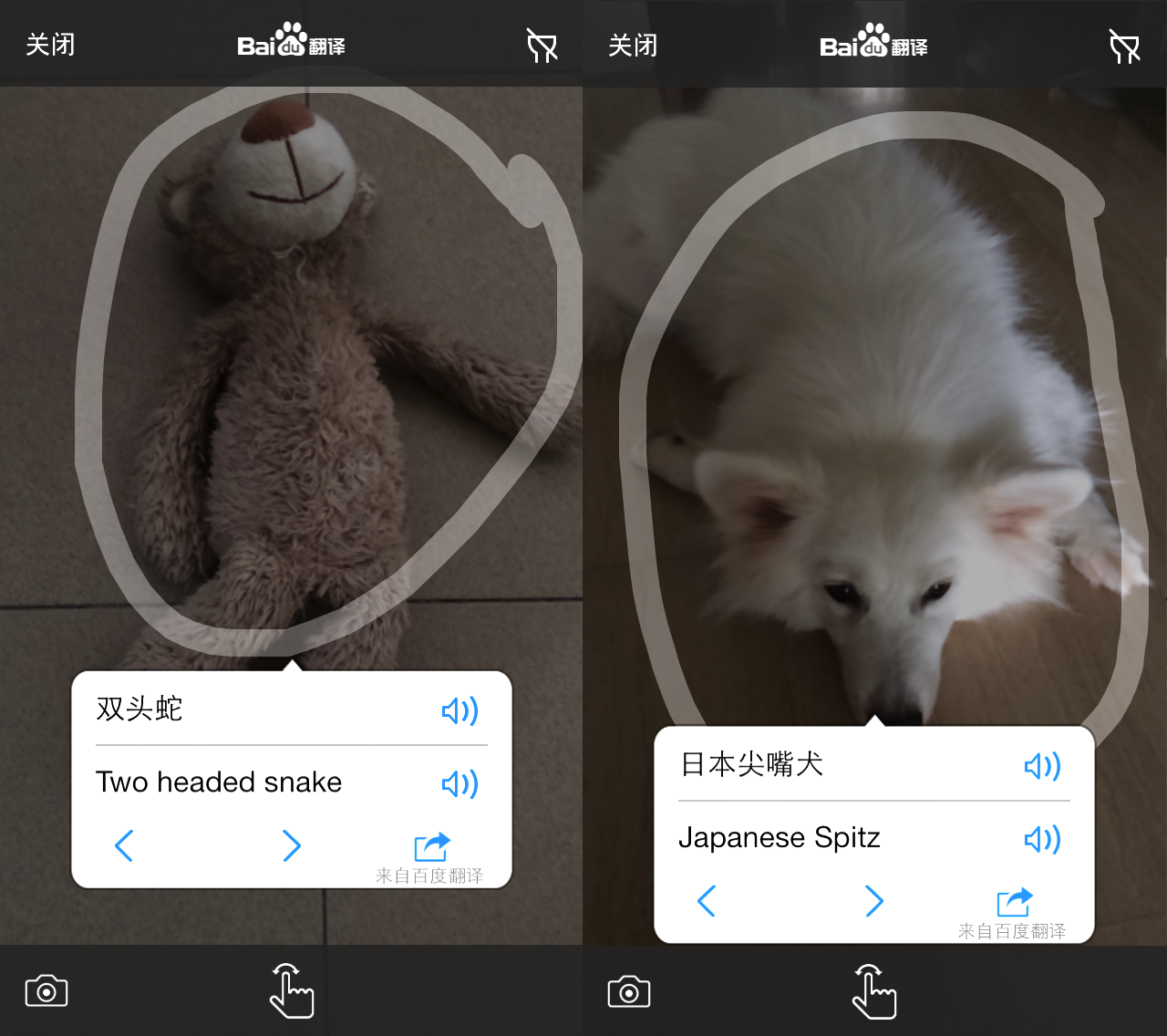
| Chinese search giant Baidu’s translation app now recognizes and translates images Posted: 20 Jan 2014 03:13 AM PST  Chinese search giant Baidu has added object recognition to its translation app, a nifty feature that lets you take a photo of something and lists its Chinese name, as well as the English translation of it. However, it remains to be seen whether the feature is merely a cool gimmick or a genuinely useful new addition that will become indispensable to users. Google already has this feature in its standalone Android app Google Goggles, and it's also built into Google Translate for Android, where you can "take a picture to translate." The object recognition feature was added to Baidu's iOS app via an update over the weekend, having been added to the Android app last month. All you have to do is select 'Photo' then 'Object,' snap a picture, circle it with your finger, and hit the check mark — the app will attempt to identify the object and give you the Chinese term and English translation for it.
The accuracy of the recognition feature really varies greatly — check out the two very different results I got below. This feature will likely only be employed if I didn't know both the Chinese and English terms for an object, but that could also cause embarrassment if you didn't know both languages and started calling a teddy bear a two-headed snake.
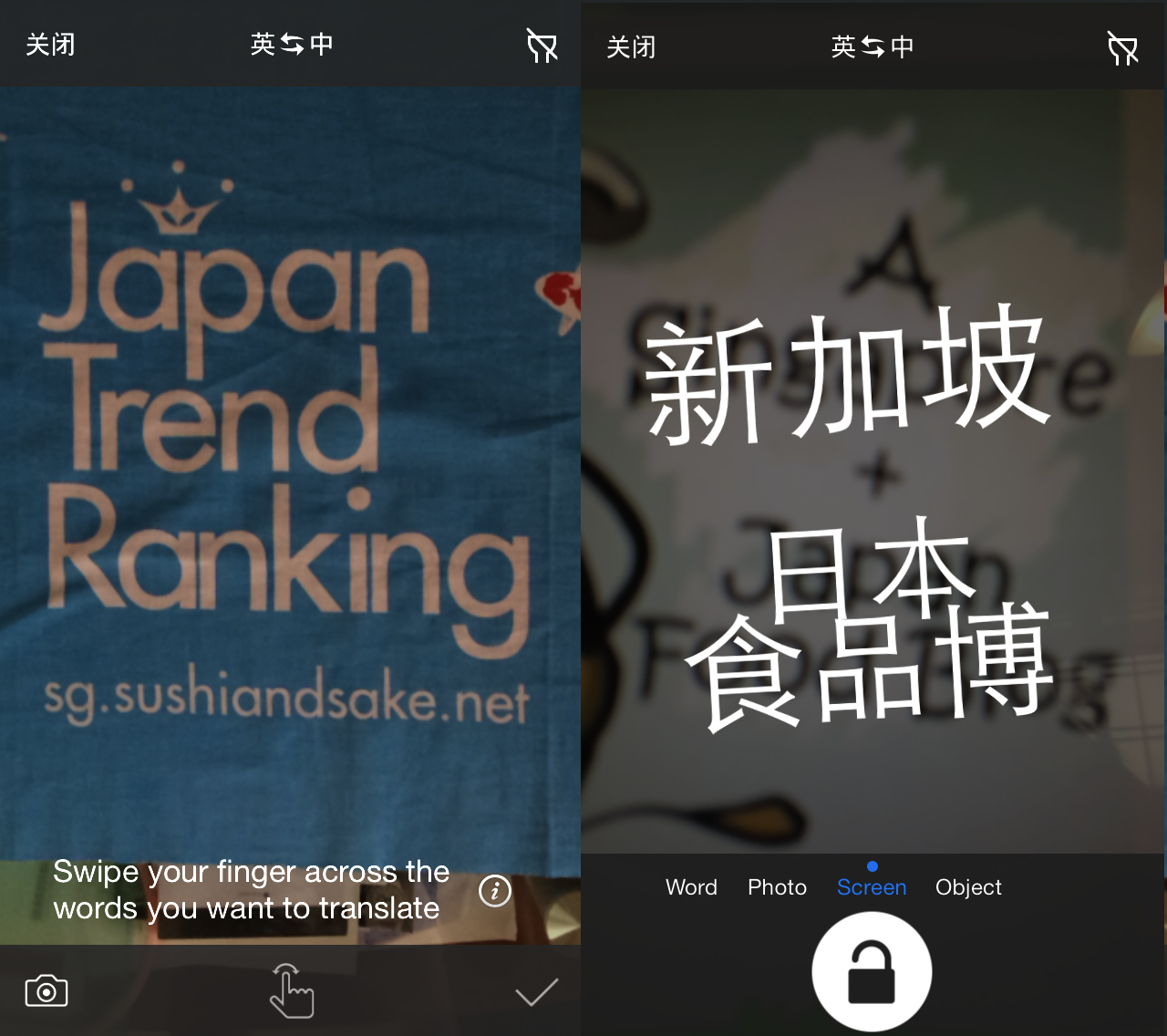
The 'Photo' feature in Baidu's translation app also lets you translate words on photos from your camera roll — all you have to do is swipe across the words — as well as text on a screen, such as on a laptop, tablet or TV. From our testing, it appears to work best with images that include larger font and words that can be clearly captured.
All these image features may be useful, but only to a certain extent — and I don't foresee myself using them frequently — but the feature has just shipped after all, and will surely improve over time as Baidu makes tweaks to it. Furthermore, image translation could work wonders in certain situations — such as when you visit a restaurant and take a picture of a menu you don't understand, or if you need the name of something seen on the street in both languages. Ultimately the core of Baidu's translation app still remains its strongest point, and this is where it performs the best, as it provides sample sentences which give an idea of how to use a certain phrase in various situations.
However, Baidu's app only supports 10 languages currently, a far cry from the more than 70 languages users of Google Translate can switch between. Ultimately, Baidu's translation app is still catered more for the Chinese than for any other user in the world. Headline image via Liu Jin/AFP/Getty Images This posting includes an audio/video/photo media file: Download Now |
| Offline over the weekend? Read all the tech news you missed right here Posted: 20 Jan 2014 02:31 AM PST  As another Monday rolls around, it can only mean one thing: there's a good chance you missed this weekend's best tech news and features while you were offline having fun/taking care of chores/recovering in bed, but don't worry, we were paying attention. So, if you spent the weekend gallivanting instead of keeping tabs on the tech world, sit down, make a coffee and spend 10 minutes catching up on everything you missed from The Next Web and beyond. News from over the weekend at The Next Web:
Good reads:
From beyond The Next Web:
Featured Image Credit – Getty Images This posting includes an audio/video/photo media file: Download Now |
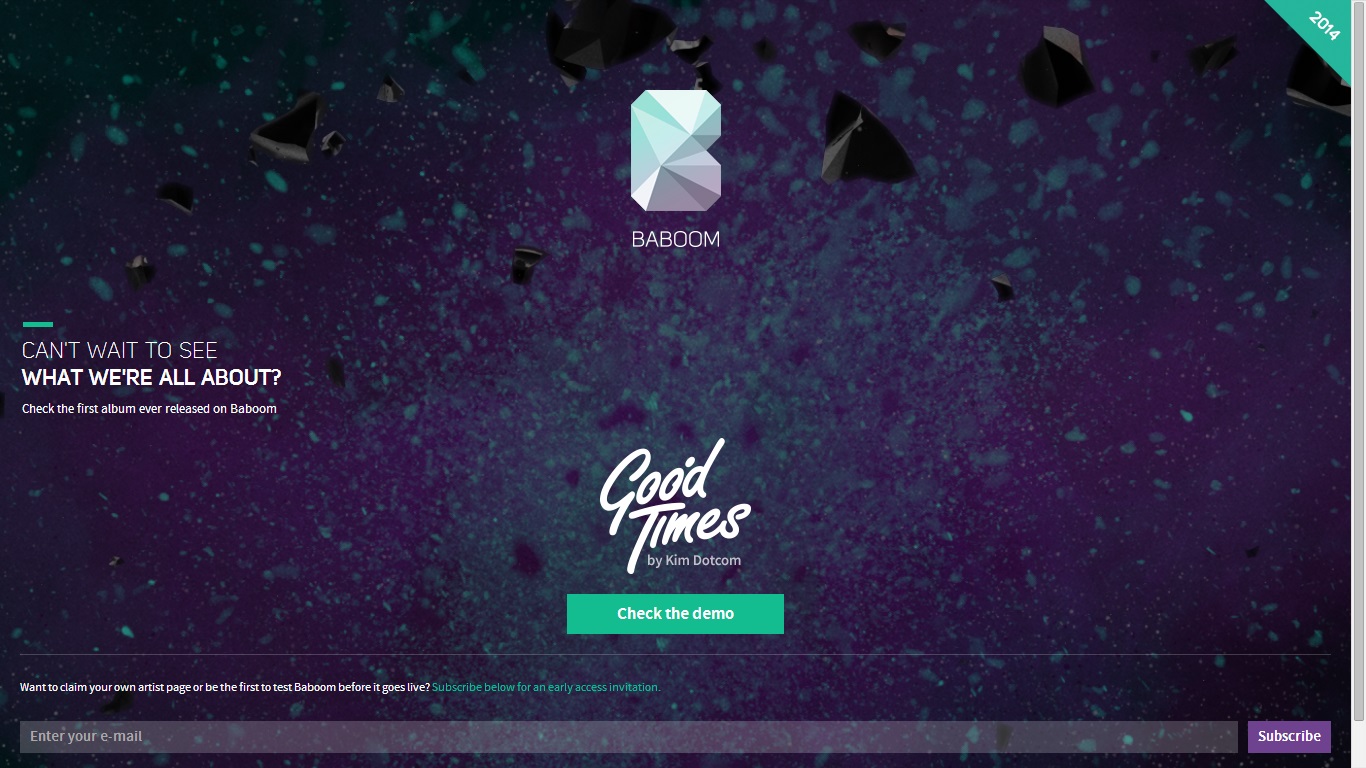
| Kim Dotcom gives a sneak preview of Baboom, his new music streaming service Posted: 20 Jan 2014 02:20 AM PST  Kim Dotcom's new music streaming service — Baboom — is still to go live, but the Mega CEO has given us a look at what is in store after releasing a limited preview that features none other than him, and his first-ever album 'Good Times'. Dotcom has described the service as a combination of Spotify and iTunes, and the design is pretty slick. In addition to music streaming — as you'd well expect — artist pages include a bio, photo and video galleries, and the option to download content that an artist has designated as available for free.
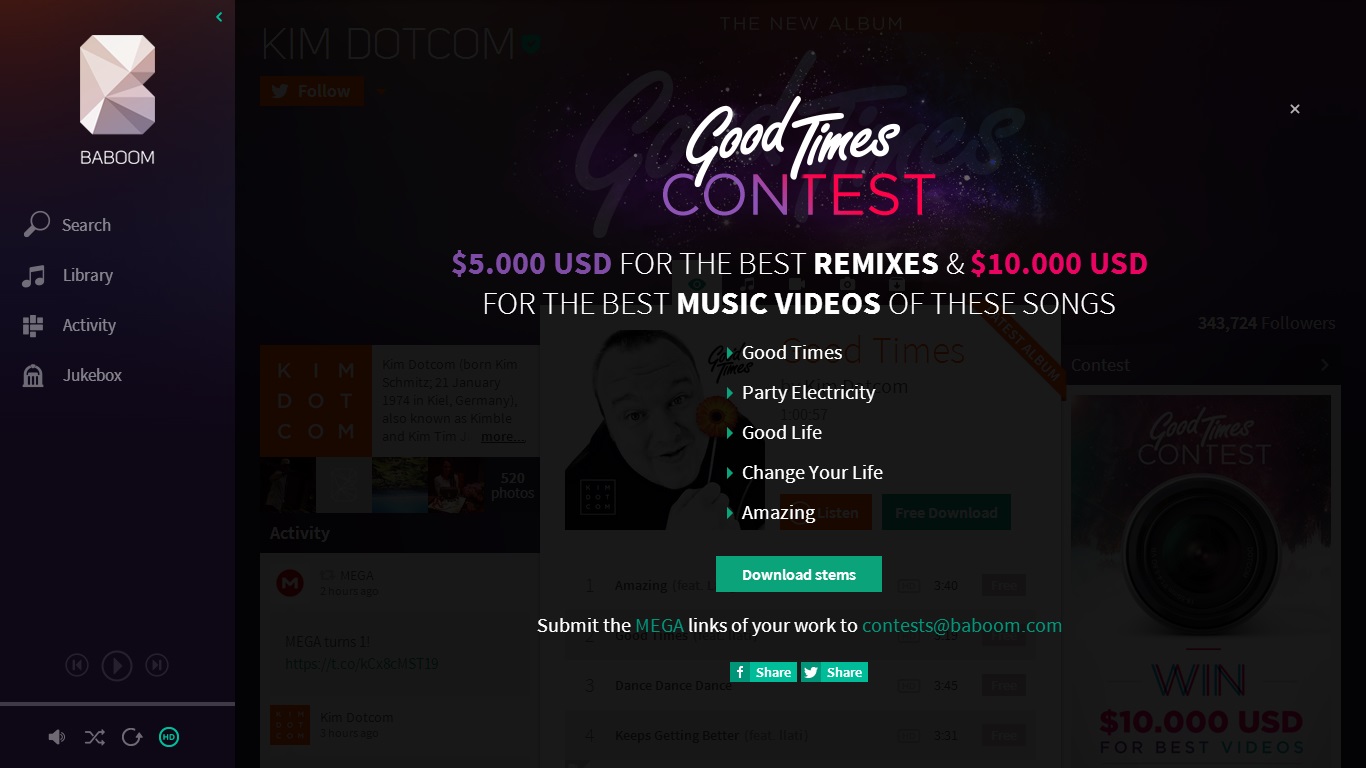
Most of the site is still off-limits as the service has not fully launched yet, but there are hints that users will be able to curate a library of selected tracks, and hit a jukebox mode for random tunes. The presence of an 'activity' tab suggests there is a social element to Baboom, but that wouldn't be a big surprise since it is a staple part of established streaming services like Spotify, Rdio, Deezer and others.        Dotcom's own artist profile is the only one that is available right now, but artists and early adopters keen to get on board can provide their email address for updates. Interestingly, Baboom is offering viewers a chance to earn money by getting their creative juices flowing. The best remixes of five of his songs will earn their creators $5,000, while $10,000 is on offer for the best music videos for each song. We presume this is an offer to promote 'Good Times' and Baboom together, but it remains possible that this is the kind of engagement that Dotcom is looking to foster between artists and fans that use the service.
Despite launching Baboom, his second new venture following Mega.co.nz — which launched a year ago today – Germany-born Dotcom remains on bail charged with a series of offenses relating to his previous business — Megaupload — that was shut down by the US government two years ago. Speaking at the time, the Depart of Justice said the Megaupload case was "among the largest criminal copyright cases ever", and we doubt they take too kindly to another Dotcom business, irrespective of whether it is entirely lawful or not. Can Baboom succeed?Dotcom and Baboom are starting a long way behind the Web's top streaming companies — which are about to be joined by Beats, which will launch its own music service this week. Dotcom has previously enjoyed a good relationship and rapport with many artists in the music industry — including P Diddy, Will.i.am, Alicia Keys, Snoop Dogg and Kanye West – and he will need to summon those relationships, and more, to bring top talent and popular music to the site. For now though, we don't yet know how Baboom will work exactly, so it is tough to know exactly how it will differentiate itself from Spotify, Deezer, Rdio, Xbox Music, Beats and co. ➤ Baboom Headline image via Sandra Mu / AFP / Getty Images This posting includes an audio/video/photo media file: Download Now |
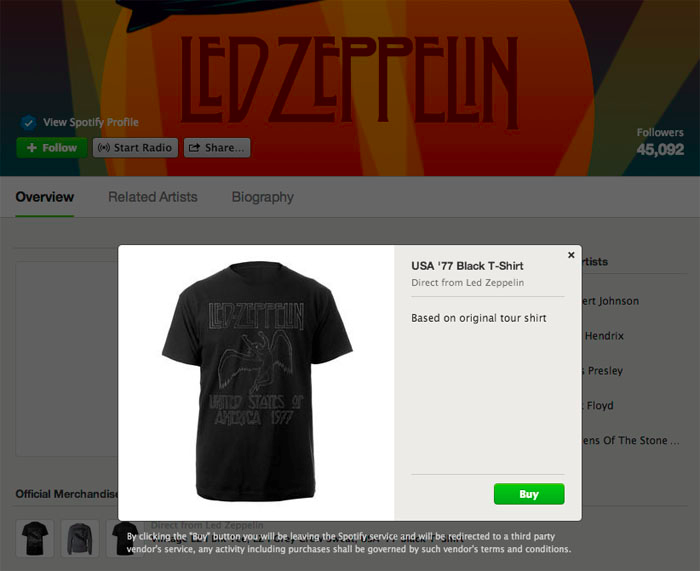
| Spotify now lets all artists list merchandise on its music streaming service Posted: 20 Jan 2014 12:18 AM PST  Late last year, music-streaming service Spotify promised that it would roll out in-app merchandise listings in partnership with Topspin – and today the company has delivered (hat/tip Music Ally). From now onwards, all artists can list their merchandise — including t-shirts, vinyl, posters, bundles among others — to all of their fans and followers on Spotify, for free. This means that there will be zero fees or commission from Spotify or Topspin, making it more of a value-added service that the company is rolling out to attract more artists to its platform (or maybe appease them, as after all much has been said about how much or how little streaming services actually pay artists who host music on their platform).
Spotify says it has been testing the functionality with a number of artists over the last month, and the "response from fans has been fantastic." Mark Williamson, director of artist services at Spotify, says:
The merchandise listings within Spotify link to an artist's existing merchandise anywhere on the Web — which means artists don't have to change the way they sell their merchandise. All artist managers have to do is create a Topspin Artistlink account, go through verification, and get the listing moderated and approved before it will show up on the artist page in Spotify.    For now, only users in the US, UK, Ireland, Australia, New Zealand, Denmark, Sweden, Norway and Iceland get to see the merchandise listings. However, artists from anywhere in the world can put up their merchandise on their page, if they want to target users from these countries as well. Last month, Spotify also introduced concert listings right inside its platform, for free — which let all Spotify users see when artists are performing in their areas and click to buy tickets immediately. These moves come as Spotify is working hard to boost its relationships with musicians — in an effort to address criticism and provide greater transparency, Spotify also recently launched a website explaining how its business model works. Headline image via Jonathan Nackstrand/AFP/Getty Images This posting includes an audio/video/photo media file: Download Now |
| Chinese search giant Baidu offers more entertainment options with a wireless music streaming box Posted: 19 Jan 2014 11:14 PM PST  Baidu may be China's search stalwart — but it has been quietly developing various options in the entertainment industry as well. The company already owns a Baidu Music app — which is available only within China — with several million songs within its database that have received the necessary copyrights, and synchronizes with 17 music lists including Billboard Hits and the UK chart. Recently, Baidu released a wireless music streaming box that lets you play songs via its music app, as well as other music apps on the market — which means you can gather all your songs together wirelessly into a hub, then play them without having to access your individual apps. The wireless music streaming box can be connected to speakers as well, so it acts as a nifty add-on to consumers' living rooms.
For just CNY99 ($16), the wireless music streaming box is a practical media hub for all your songs. It supports Airplay on iOS devices, as well as DLNA and Qplay on other devices including a series of Android smartphones. The first 20,000 units of Baidu's music box are up for sale on e-commerce site Jingdong, as first spotted by Tech in Asia. Last year, Baidu rolled out a series of media devices — including a HDMI TV plugin today that seems to be a clone of Google's Chromecast, as well as a USB WiFi dongle and a wireless router. Headline image via Liu Jin/AFP/Getty Images This posting includes an audio/video/photo media file: Download Now |
| Korea’s largest operator, SK Telecom, to offer 300 Mbps mobile Internet before end of 2014 Posted: 19 Jan 2014 10:17 PM PST  Mobile Internet is about to get even faster in Korea. The country's largest operator SK Telecom introduced the world's first LTE-Advanced service in June (its two rivals had followed suit by September), and now it has announced that it will roll out a lightning fast 300 megabits per second (Mbps) service in 'late' 2014. For context, regular LTE offers around 75 Mbps, with LTE-Advanced (LTE-A) upping data speeds to 150 Mbps, but SK says its new technology — dubbed 3band LTE-Advanced — raises the standard further still. According to Yonhap News, it is made possible by 'aggregating' two different frequency bands — in this case, a 20MHz bandwidth in 1.8GHz band and 10MHz bandwidth in 800MHz band. The upshot is that users will be able to enjoy the benefit of incredible speed and more options on the go thanks to the service. For example, SK says that using 3band LTE-A, an 800 MB movie will download in 22 seconds — that's opposed to 43 seconds using regular LTE-A, 85 seconds using standard LTE, and 7 minutes and 24 seconds over 3G. SK will show off its upcoming ultra-speedy technology at the 3GSM event in Barcelona next month. It says the service will go live before the end of the year, but it will only be available for new smartphones, tablets and PCs fitted with dedicated support. The operator says it is looking into whether it can develop 4- or 5-band LTE for an even faster service — though there's no time frame for when those might arrive. Image via Jung Yeon-Je/ AFP / Getty Images This posting includes an audio/video/photo media file: Download Now |
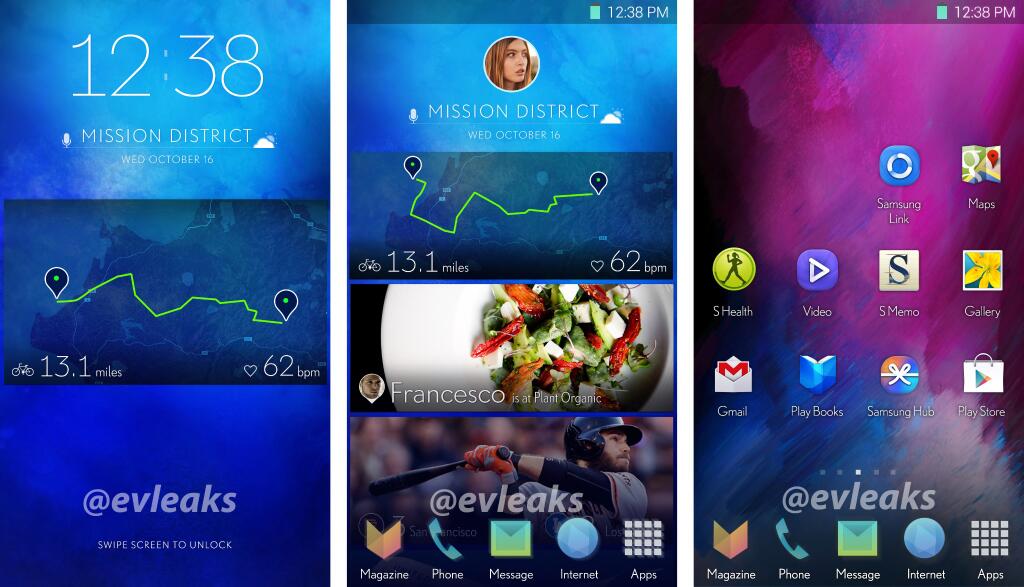
| Leak suggests Samsung’s revamped TouchWiz UI will include Google Now-like notifications Posted: 19 Jan 2014 08:22 PM PST Previous leaks have strongly hinted that Samsung is preparing a redesign of TouchWiz, the user interface that is pre-loaded on its Android mobile devices, and that appears to include a feature that is reminiscent of Google Now. A new image posted by @EvLeaks suggests Samsung is taking cues from Google's personal assistant with a card-like interface that includes information about a user's location, recent purchases, flight information, recent exercise activity, the local weather/temperature and other details. TouchWiz is regularly criticized for being cluttered, ugly and slow. Coupled with the previous leak (below), the design seems far more organized and attractive, while it has the potential to be genuinely useful, rather than simply Samsung bloatware. Watch this space.
Headline image via Jung Yeon Je / AFP / Getty Images This posting includes an audio/video/photo media file: Download Now |
| Microsoft Research built a smart elevator that uses AI to figure out what floor you’re going to Posted: 19 Jan 2014 07:26 PM PST  Microsoft Research is pushing the boundaries of artificial intelligence to a whole new level. Imagine a smart elevator that can figure out what floor a person wants to go to, based on their history and other factors. Okay, now you don't have to imagine it anymore. In an interview with Bloomberg, Head of Microsoft Research Peter Lee explains that AI is the company's biggest focus right now. Check it out for yourself (the elevator part starts at 2:40): Lee elaborates how a Microsoft Research team set up a bunch of sensors in front of the elevators. These in turn watched what people did, without any additional programming, for about three months. Over that time period, the AI system learned how people behaved and began to understand their intentions. After the training period, the learning portion was turned off, and the intelligent system could control the elevator and act on the user's behalf. Here's Lee offering a specific use case:
Lee's job is to think further ahead than just what will be the next killer device to hit the market. Most of us currently sit down in front of a computer or take out our phone on the go and operate it, but Microsoft Research is looking to the next era of computing: "We think in the future, you won't be operating computers, but instead computers will be working on your behalf." See also – Microsoft Research uses Kinect to translate between spoken and sign languages in real time and Microsoft Research and the UN team up to build a computational model of ecosystems across the world Top Image Credit: Bloomberg This posting includes an audio/video/photo media file: Download Now |



| You are subscribed to email updates from The Next Web To stop receiving these emails, you may unsubscribe now. | Email delivery powered by Google |
| Google Inc., 20 West Kinzie, Chicago IL USA 60610 | |