The Next Web |
- Here’s how to find a yeti in Yahoo’s Weather app for iOS
- Microsoft brings the classics back as solitaire, mahjong, and minesweeper launch on Windows Phone
- Here’s what a quadcopter and GoPro camera captured on video in San Francisco this Christmas
- Facebook’s 2013: The quest for a ‘mobile-best’ platform
- Rdio closes Vdio: ‘We weren’t able to deliver the differentiated customer experience we had hoped for’
- Target confirms debit card PIN info stolen in massive breach, but says data is ‘safe and secure’
- The NSA’s widespread collection of telephone data is ‘lawful’, rules a district judge in New York
- Branching out: Why you shouldn’t limit your startup to just one location
- 10 Ingredients for the perfect presentation
- Security hackers got you scared? Focus on fundamentals, not hype
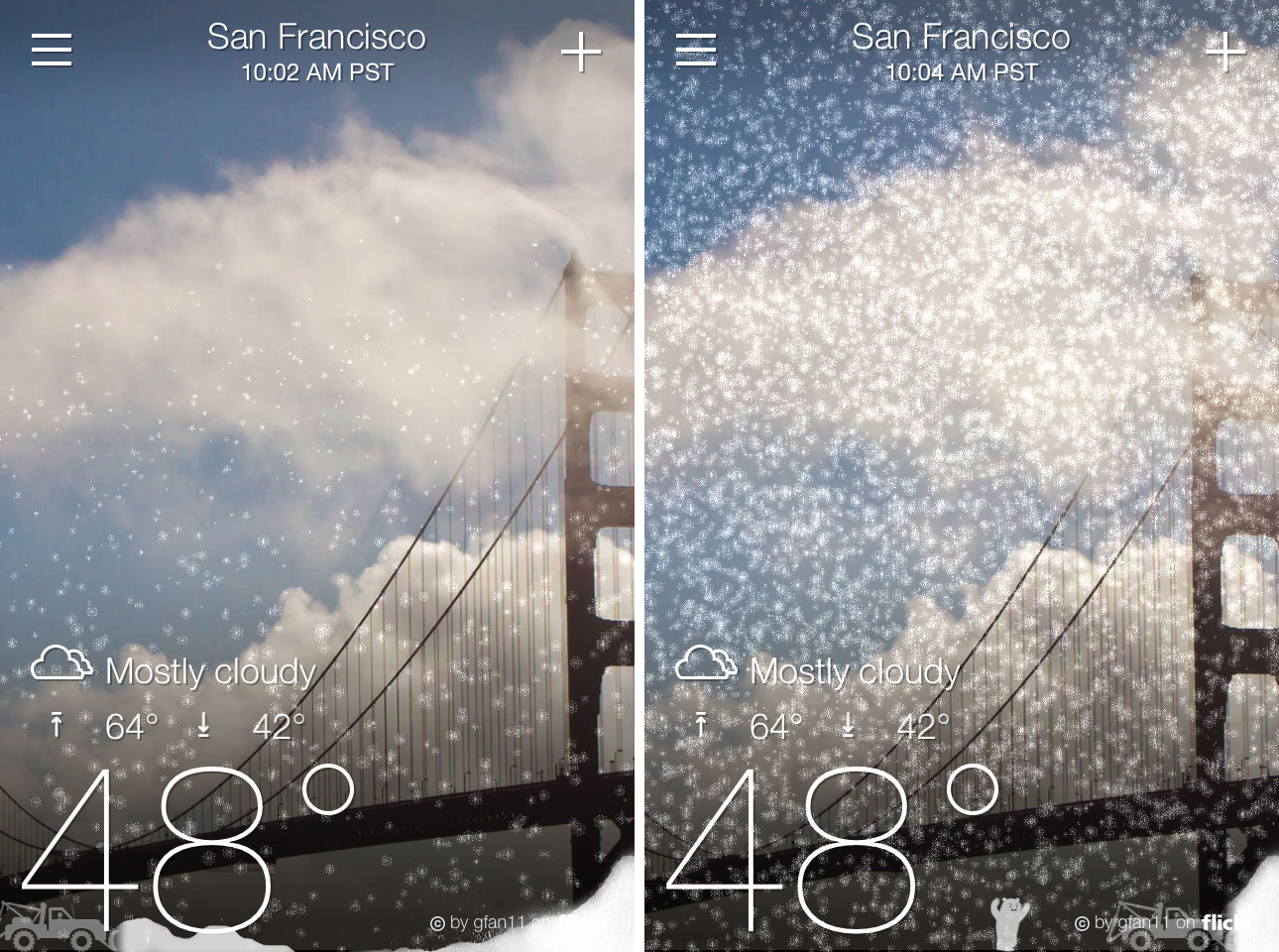
| Here’s how to find a yeti in Yahoo’s Weather app for iOS Posted: 27 Dec 2013 04:36 PM PST Every Christmas, there are quite a few people who wish they had one filled with snow. Well, worry no more as Yahoo's Weather app for iOS has a bit of an easter egg that will not only cause it to snow at your location, but display yetis. Yes, those mythical creatures also known as Abominable Snowmen. Don't see it? As it turns out, using the iOS app, shake your device and it will start snowing — treat it as a snow globe and shake it as often as you like. The more you shake, the more snow accumulates on the bottom of the screen. Eventually, you'll see a snowplow appear to clear the area. If you do it enough times, you'll notice a yeti run across the screen. A word of caution: if you're going to shake your phone, be careful not to let go of it. While an easter egg of this is fun to experience, it's not worth you destroying your iOS device. This feature is only for iPhone and iPads. It's the small things… Photo credit: Brian Kersey/Getty Images This posting includes an audio/video/photo media file: Download Now |
| Microsoft brings the classics back as solitaire, mahjong, and minesweeper launch on Windows Phone Posted: 27 Dec 2013 02:00 PM PST If you have a Windows Phone and are bemoaning the lack of apps, then you're about to get three of the all-time classics. Microsoft revealed today that solitaire, mahjong, and minesweeper are now available for download. Each of these games, which have been a staple on most Windows operating systems over the past two decades, have been redesigned to account for the more non-PC devices. Specifically as Xbox games, players can earn achievements or play against one another. In addition, all the games can be played across multiple devices, meaning that you can start on Windows Phone, pause it, and resume playing on a tablet or on your PC.    ➤ Minesweeper for Windows Phone Photo credit: Stephen Lam/Getty Images Hat-tip to the Verge. This posting includes an audio/video/photo media file: Download Now |
| Here’s what a quadcopter and GoPro camera captured on video in San Francisco this Christmas Posted: 27 Dec 2013 11:23 AM PST Christmas time is truly a majestic time no matter where you are, but one photographer wanted to share his experience in the city that he loves. Using a radio-controlled quadcopter along with a GoPro camera, Beto Lopez navigated through the City by the Bay on Christmas Eve to capture what San Francisco looks like. The 5 minute and 17 second video takes viewers along sights like the Ferry Building, the Palace of Fine Arts, the Exploratorium, Coit Tower, Pier 39 near Fisherman's Wharf, and finally to the famous Tom and Jerry house to view its Christmas decorations. Photo credit: Justin Sullivan/Getty Images Hat-tip to CBS 5 This posting includes an audio/video/photo media file: Download Now |
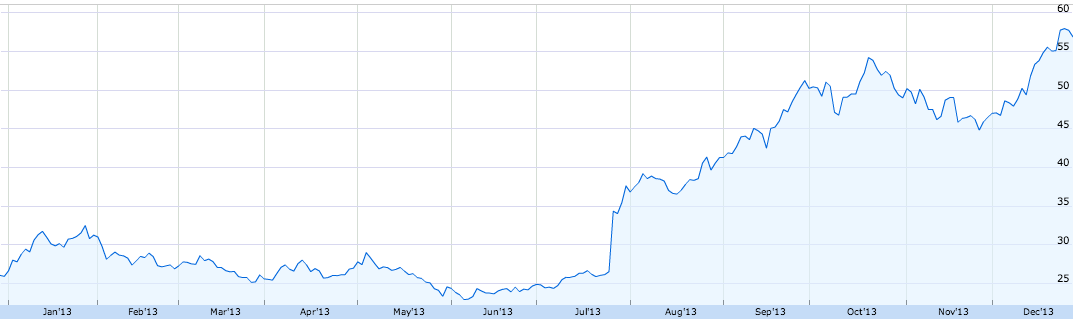
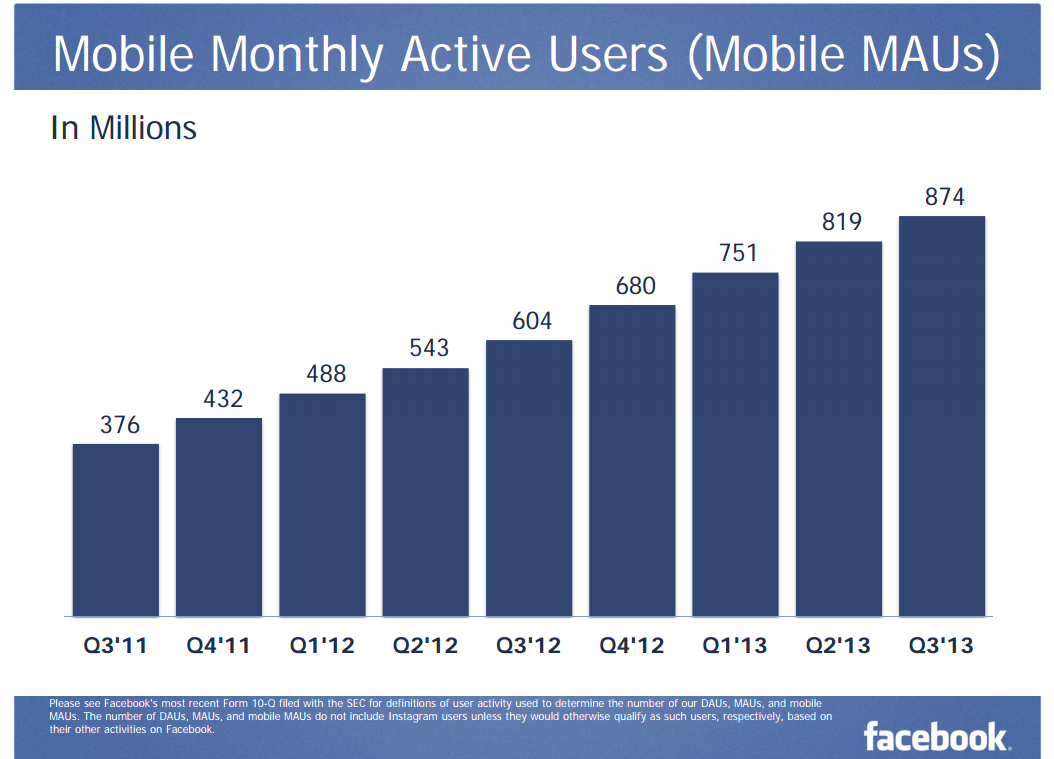
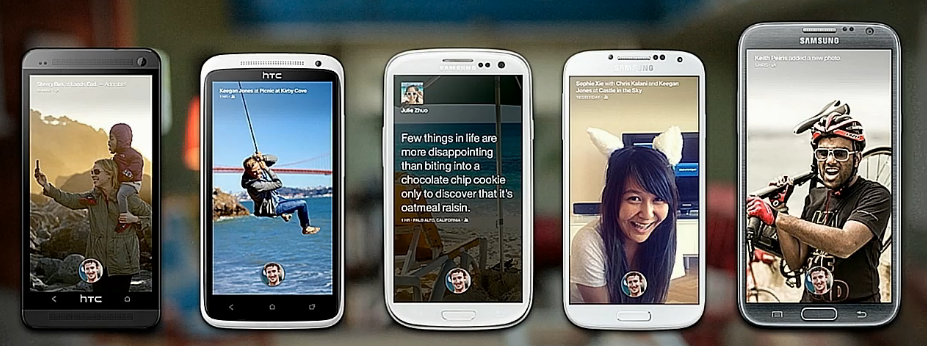
| Facebook’s 2013: The quest for a ‘mobile-best’ platform Posted: 27 Dec 2013 10:30 AM PST  Facebook has spent much of first full year as a public company working on ways to help increase opportunities for advertisers and also bolstering its efforts to become "mobile best". As 2013 wraps up, by its stock price, it appears that investors are finding the company's strategy to be working — it has increased 158.4 percent to its 52-week high of $58.58 (at time of this publication). A lot of changes have taken place within Facebook over the past year. Perhaps most notably is the realization that it does know what it's doing when it comes to mobile. But the year hasn't been completely kind to the social network as it's been plagued by a failed product launch and, of course, the Edward Snowden NSA scandal. Here's a look at Facebook's 2013: Rising stock priceAs mentioned previously, Facebook's performance this year may have proven to investors that the company is still working to make improvements and is innovating. Yes, it did encounter some issues from the get-go after it began trading its first shares, but this year would see the price finally end higher than its IPO price of $38, even possibly ending the year near the $60 mark. But what led the company to finally land on its feet and overcome not only criticisms about its mobile capacity but also about how it can help advertisers and developers reap the rewards of integrating themselves into the Internet's largest social network? Course correction to be "mobile-best"In his first public appearance following his company's IPO, at TechCrunch Disrupt in 2012, CEO Mark Zuckerberg admitted that Facebook's stock performance has "obviously been disappointing." He also revealed that over the next three to five years, what will make or break the company would be on how it treats mobile. His Chief Operating Officer Sheryl Sandberg echoed these statements on CNBC saying that mobile and advertising products would be what wins over investors. Prior to the conference, there were iOS and Android apps available, but they were developed as much-criticized HTML5 versions. These apps had slow response and load times, intermittent notifications, utilized a UIWebView interface, and were said to crash frequently. Eventually, Facebook shifted its priorities to focus on native apps for the major mobile operating systems and things started to improve from there. But it wasn't all about simply having an app — the company shifted its efforts to make sure that it's social network was accessible no matter what device you were using, be it iPhone, Android, BlackBerry, Windows Phone, or even a feature phone. This year, Zuckerberg introduced a philosophy that Facebook wasn't about just being on mobile first, but rather being "mobile best". What exactly is "mobile best"? It's Facebook's way of saying that the mobile device is the best way to access its services. With these two words, Zuckerberg made it clear that the social networking company was going to move forward with its mobile initiatives. So did Facebook's strategy work? It certainly did as mobile usage has grown from 680 million monthly active users (MAUs) in Q4 FY2012 to 874 million in Q3 FY2013 (at the time of publishing, Facebook had yet to report its Q4 FY2013 results). Currently, it's seeing an increase of 45 percent year-over-year. This fiscal year also marked the first time when the social network had more users on mobile compared to the desktop or Web browser. Advertisers even recognized this uptick as more budget was spent to entice users to pay attention to brands — in Q3 FY2013, ad revenue totaled $1.8 billion, a 66 percent increase year-over-year. Of that amount, mobile advertising represented 49 percent, or approximately $872 million. The launch of a test group for its Android app has also restored confidence in Facebook's shareholders. This summer, it launched the Facebook for Android beta program geared towards allowing some users early access to new features in exchange for their feedback. Four months later, it garnered 1 million daily active users in the program and received over 1,000 direct pieces of feedback. This fall, the social networking company unveiled another user test program to get feedback even earlier. With the Facebook for Android alpha program, it's fundamentally similar to the beta program, except that users will be exposed to really early features that may not have the same spit-shine and polish that you'd get in the beta or final release. However, while the company has received a much needed boost in its stock price, it needs to make additional improvements to build up a solid platform, something that many have criticized in 2013 as being a "missed opportunity" or simply at an end. Coming up, we'll highlight some of Facebook's stumbling blocks this year. This isn't the Home that Facebook users wantedIn April, Zuckerberg launched what he thought was a great product called Home. It was an Android launcher that was billed as a way to help put people ahead of apps. However, when looking at Home, not much stood out from what you would get from an Android device, with the exception of three new features: Cover Feed, App Launcher, and Chat Heads. Home would become available on select devices, including the HTC One X, HTC One X+, Samsung GALAXY S III, and the Samsung GALAXY Note II. Facebook said that it was to receive updates every four weeks from the Google Play store. In addition to this announcement, Zuckerberg revealed that Home would be pre-installed on the HTC First smartphone. That decision didn't play out so well as the sales numbers were so dismal that AT&T quickly priced the phone at $0.99 with a two-year contract (it didn't even make it to the UK). But while the HTC First didn't find its legs, Facebook Home may have. It was downloaded 1 million times four weeks after its debut, and while it apparently didn't impress some, the company has been releasing improvements on a regular basis. Recognizing the popularity of its signature features, Facebook brought Chat Head and Cover Feeds to its native iOS and non-Home enabled Android apps. In the latter half of 2013, Facebook would unveil further updates to Home, including Flickr, Tumblr, Pinterest, and Instagram lock screen integrations and also time, weather, and notifications. Too cool for … teenagers?During the company's last earnings report, Facebook Chief Financial Officer David Ebersman admitted that the social network saw "a decrease in daily users specifically among young teens." This naturally caused some concern from the public who felt that a decrease in these generational adopters could signal trouble for the company. Facebook sought to reassure its investors, saying: "We remain close to fully penetrated among teens in the US." Anthropologist Daniel Miller penned an article in The Conversation saying that teenagers leave Facebook because of their parents. It turns out that they're embarrassed to be seen on the same social network as their mother and father — therefore it's not "cool" anymore. Wired doesn't think that the company should worry about it as it won't change Zuckerberg's mission of creating what it calls a "global utility".
Sandberg denied any such teenage user exodus while on stage at the D11 conference in May. She said that any such claim was unfounded and believes that while messaging services like Snapchat, Line, WhatsApp, and others are gaining popularity, there's plenty of time left in the day for this particular segment to use Facebook even more. No matter how Facebook perceives this issue, whether it be major or a minor bump in the road, it still highlights an interesting dilemma for the company. How exactly can it improve its mobile performance to appeal more towards the teenage audience while competing against the likes of Snapchat? Can its platform sustain such innovation? Brian Solis, a principal analyst at Altimeter Group, told ABC News at the time that teens have a different social life than adults:
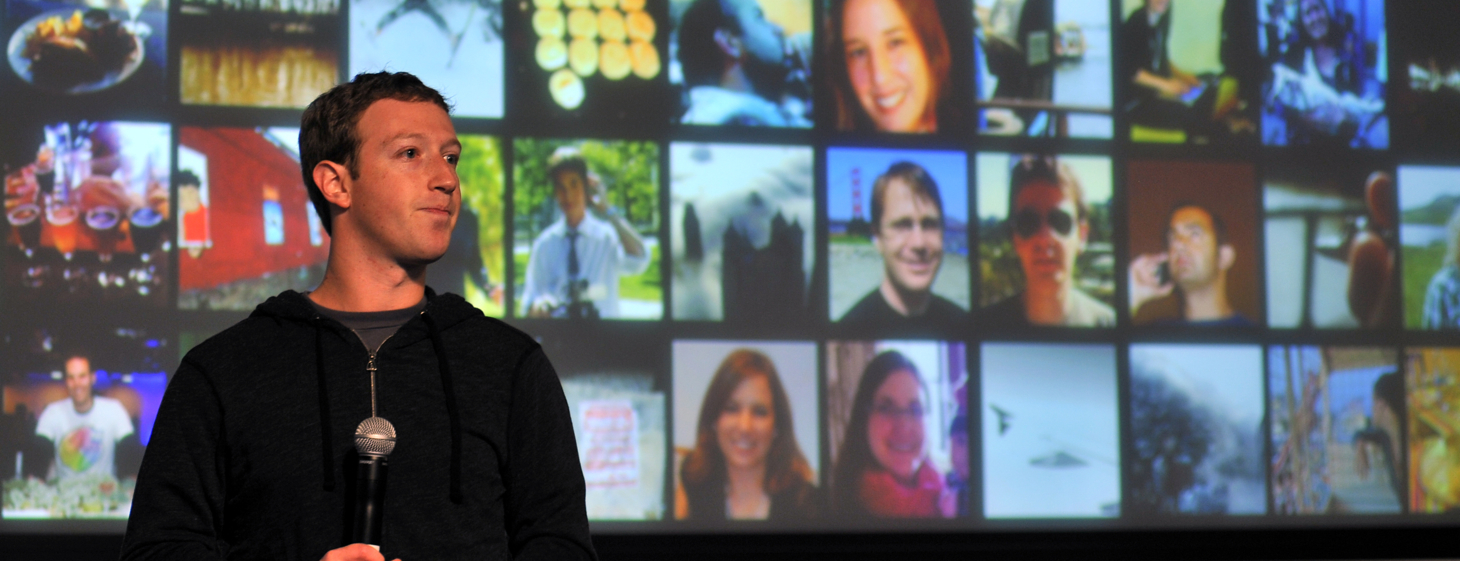
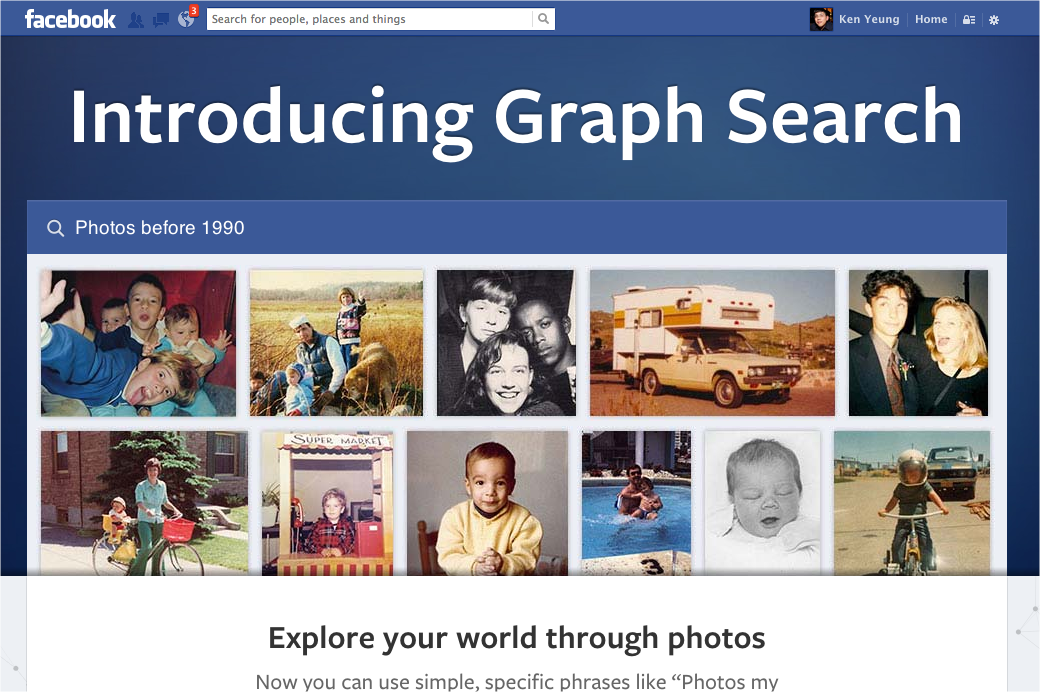
Building a bigger and more relevant social graphHome wasn't the only major product announcement that Facebook unveiled this year. It also launched Graph Search, a way for people to query their social graph to find out what people are sharing about a particular topic. It is currently only available to the social network's English audience, but has become a critical part in better understanding user trends and behaviors to potentially improve targeting of ads and other services. The necessity of this product becomes apparent when you think about the millions of status updates that are posted to Facebook every day along with the 240 billion photos and 1 trillion connections that exist in the social graph. Graph Search isn't Google or Bing added on top of Facebook — it's designed to deliver an answer based on specific queries like "TV shows watched by doctors" or "Music liked by people who like Mitt Romney" or even "Friends that like watching Game of Thrones that live in San Francisco". Launching Graph Search was no easy thing for Facebook to do. It first needed to parse through all the content and find a way to transform plain text descriptions in a user's profile into structured data. Previously, the fact that you were interested in "House of Cards" or "Skydiving" was just words. Facebook's Entities team found ways to add more meaning behind these choices, helping others search for others with similar interests and better connect them, while also developing new ways to target ads and make money off of it. While available just on the Web browser, Graph Search can give Facebook a barometer of things people are interested in, which will better help it determine what's trending. The components are all there to further mimic what Twitter already has in place: starting this summer, it added support for hashtags that lets users discover shared interests and add more context to what they're posting. It followed that up by testing a trending topics feature on its News Feed that not only could pull queries from Graph Search, but also popular hashtags like #NelsonMandela or #SantaClaus. News Feed gets redesignedWhile a redesign may not necessarily be the most newsworthy thing in the world, in this case, it was done as a way to bring parity between Facebook's Web browser version and what one sees on mobile devices. In May, the company unveiled a more organized and personalized News Feed that will not only give users the top stories, but also socially relevant and local content from their friends and family near them. As the central place for information about users, Facebook says the redesign was to evolve it into a newspaper of sorts. It brings elements of a user's Timeline into the story to better understand what you and others have in common, their cover photo, along with other things. It will help you discover what's important to you, what others in your network is saying, Page and subscription updates, and more. In looking back at this update, it's fundamentally an aesthetic change. However, the fact that it now has some consistency across desktop and mobile devices is important — helps to show that Facebook isn't looking at things piecemeal anymore. But while a valiant effort, will it bridge the devices to create a single form of Facebook? It doesn't appear so. Even today, nine months after its debut, not everyone has the new design and there are some saying that many won't actually receive it. Why? Sources told AllThingsD that when it released to a small percentage of users, the level of engagement "stalled":
Nevertheless, Facebook is still proceeding with other options to help make News Feed relevant to its users. This year also saw the company pull back the shroud of mystery surrounding how content gets surfaced on News Feed, talking more about its algorithm and other techniques being used to make sure that users see what they need and want to. Improved mobile app install adsWhile the company was pursuing new products for consumers, it was also making changes to its advertising platform to help increase its revenue. In October 2012, it unveiled its mobile app install ads, which became another opportunity for developers to monetize their applications built around Facebook's platform. Over the past twelve months, this ad format has been improved so that it now enables developers to specify whether their apps can be targeted based on a user's operating system or whether they're on WiFi or a data plan. Additionally, the creation process has been simplified so that one only needs the App Store URL to create the placements. This fall, developers were able to utilize custom calls to action in their ads, whether it's "Open Link", "Use App", "Shop Now", "Play Game", "Book Now", or anything else. The idea is to help encourage potential users to tap and interact with the ads. Recently, Facebook also rolled out the latest step in its attempt to craft a DoubleClick-like service for mobile advertising on its platform — now videos can be utilized and all campaigns can be on a cost-per-action payment program. Zuckerberg's $1 billion purchase also released a couple of product features in 2013, both which are direct snipes at its competitors. Useful for the consumers? Yes. But innovative? Perhaps not. The first update came in June when Facebook introduced a new way to take video and post it to Instagram. Users could take up to 15 seconds of footage, apply one of 13 special filters, and share it with their friends. Very similar to Vine, except that there's no filters and you have 9 more seconds. Instagram's co-founder Kevin Systrom said that his app's mission has been to be a tool to help users capture moments that will be remembered forever. At the time, there were 16 billion photos shared on Instagram alone, with 1 billion likes every day. It was also being used by more than 130 million people every month. Months later, Facebook was back at it again to unveil a new private photo and video sharing feature called Instagram Direct. The Snapchat-esque service allows users to send photos to specific people, but lacks the ephemeral experience that has grown increasingly popular this year. While probably a useful tool for some users, it's certainly a reaction to the company's failed attempt at acquiring SnapChat — Zuckerberg had reportedly offered the messaging service north of $1 billion for the company, but was rebuffed. So now that Instagram runs the entire media landscape, it's about time for it to begin monetizing, right? Zuckerberg had said that he expects Instagram to generate "a lot of profit", but that ads will appear at the right time. That time appears to be now, as 2013 saw the beginnings of an ad product that perhaps saw relief from shareholders and advertisers, but also grief from users. For those in the US, the company began launching "occasional" in-feed image and video ads. Fashion designer brand Michael Kors became the first to run ads on the photo-sharing social network and Instagram's studies show that ad recall, reach, and awareness were positive. However, it's important to note that this study was done on four active campaigns — the company says that even so, the results are "promising". Privacy, anyone?Facebook as a company has had to endure numerous complaints from privacy groups, users, and the general public. Just like any other year, it has spent a great deal of time reminding everyone about its improved privacy settings. In 2012, the company simplified its privacy settings to make it easier for users to control what data they wish to make public. It also improved the permission process given to apps. Throughout this year, it released updates to help various audiences adjust what content is visible, including those victims of domestic violence. However, for all of its education efforts, Facebook has also made a few mistakes as well. This summer, it admitted there was a privacy flaw that impacted 6 million users. The result was the leaking of email addresses and telephone numbers that anyone could have had access to. At the time, the company said there was no malicious intent from the bug and it also sent an email informing users of the problem and what it was doing to resolve it. In September, Facebook wound up delaying updates to its privacy policy following protests from watchdog groups. It's said that the social networking company needs more time to ensure "that user comments are reviewed and taken into consideration to determine whether further updates are necessary." At issue was the addition of new language that states users will automatically grant Facebook permission to use their names, profile pictures, and content for marketing ads or commercial content. And, of course, let's not forget that the social network no longer has the option to control who could look up user Timelines just by their name. This feature has been completely removed following the roll out of the aforementioned updated privacy settings. But amid all of the above issues, perhaps the biggest privacy news that affected Facebook users comes from former NSA contractor Edward Snowden and revelations about Prism. In the hours after the news broke, the public found out that data had allegedly been gathered from the servers of Facebook, along with other tech companies. Zuckerberg flatly denied any cooperation his company was providing to the National Security Agency, calling such reports "outrageous":
In June, Facebook announced that it would be including in its transparency reports a list of national security orders received from the US government. Included would be those from a Federal Intelligence Surveillance Act (FISA) court and any National Security Letters. Additions to its portfolioFacebook has also picked up some new companies to help expand its offering. Perhaps one of the most well-recognized companies (at least with developers) that it acquired this year was Parse. Founded as a mobile platform as a service company, Parse has helped developers quickly build apps through its ready-made APIs and services to various technologies. Naturally as Facebook acquires companies, many would expect them to be shuttered. However, Parse has remained available to this day and is continuing to flourish. A month after the acquisition, Parse reported that it now powers more than 100,000 apps, an increase of 25 percent prior to the deal. It also held its first developer conference in September. Certainly the Parse deal has helped Facebook build more credibility with developers and is a welcome sign to stockholders who may see the potential for a more stable mobile platform now. Other services joining the Menlo Park-based company include Atlas, Storylane, Osmeta, Spaceport.io, Monoidics, Jibbigo, Onavo, and most recently, SportStream. In closingAs 2013 wraps up, there's certainly been quite a bit that's been going on in Facebook. However, one thing appears to be clear: it's a mobile world and the company has started to embrace that. Stockholders and developers are interested in seeing what the social network can do for its 1.19 billion monthly active users across every device. And as Zuckerberg seeks to connect the next 5 billion people, it's not going to be behind a desktop or laptop computer. No, it'll be from the little devices that is in your pocket, allowing you to communicate with others around the world from anywhere you are. See Related: Apple's 2013: Acquisitions, free software and incremental product updates, Microsoft's 2013 in review: A year of convergence and integration and Google's 2013: The evolution of Android, Chromebooks, Google+, YouTube, Google Glass and more Photo credits: BRENDAN SMIALOWSKI/AFP/Getty Images, Max Morse/Getty Images, Josh Edelson/AFP/Getty Images, OLIVIER MORIN/AFP/Getty Images, BRENDAN SMIALOWSKI/AFP/Getty Images, Josh Edelson/AFP/Getty Images, Justin Sullivan/Getty Images This posting includes an audio/video/photo media file: Download Now |
| Posted: 27 Dec 2013 10:05 AM PST  Rdio has shuttered Vdio, its on-demand service for buying and renting movies and TV shows. "We have decided to discontinue the Vdio beta service," the company said in an email to its users. "Despite our efforts, we were not able to deliver the differentiated customer experience we had hoped for, and so Vdio is now closed." All movies and TV shows that users purchased will be refunded and then be unavailable for streaming. On December 27, the company will stop accepting new Vdio transactions and offer Amazon gift cards to those customers with purchased videos or unused rentals. Vido VIP promotional credits are not eligible. Vdio was similar to iTunes, Amazon Video or the Google Play store, giving users a simple storefront where they could buy and stream digital content on a per-title basis. TV shows could be purchased as full seasons or individual episodes, depending on the viewer's preference. The service, available in the US, UK and Canada, could be accessed from the web or a native iPad app, although additional apps were planned. "Eventually, both Android and iPhone will be supported," an Rdio spokesperson told TNW in August. "Currently, we only have the iPad app, but, like Rdio, we plan to have Vdio available on all the same platforms over time." Rdio recently appointed Anthony Bay, formerly the global head of Amazon's digital video division, as its new CEO. By far, this is the company's biggest move to date under his leadership. Image Credit: AFP/Getty Images This posting includes an audio/video/photo media file: Download Now |
| Target confirms debit card PIN info stolen in massive breach, but says data is ‘safe and secure’ Posted: 27 Dec 2013 09:50 AM PST  If you've shopped at Target recently using your debit card, then you should be extremely watchful over your account. The retail giant today confirmed that PIN data has been stolen from debit cards as part of a security breach of its system that saw 40 million accounts being exposed. Amid this bombshell of news, Target says that it remains confident that "PIN numbers are safe and secure." On December 19, the company announced that there was unauthorized access to payment card data in its US stores. Approximately 40 million credit and debit card accounts may have been affected during the time between November 27 and December 15. Since then, Target has been working with law enforcement agencies to try and ascertain what happened and how to fix the problem. Since the incident, there have been reports that card data have been made available for sale in underground black markets. Credit card provider Chase Bank has placed some temporary restrictions on cards affected, limiting them to $100 withdrawals and $300 in purchases each day. As for today's news, Target remains adamant that the PIN information is fully encrypted and that the only way to display the information is when it's received by its "external, independent payment processor":
Photo credit: Joe Raedle/Getty Images This posting includes an audio/video/photo media file: Download Now |
| The NSA’s widespread collection of telephone data is ‘lawful’, rules a district judge in New York Posted: 27 Dec 2013 09:26 AM PST  A federal judge in New York ruled today that the National Security Agency's (NSA) mass telephone data collection program is legal, rejecting claims put forward by the American Civil Liberties Union. William Pauley, the presiding judge for the case, revealed how the program has affected the NSA's intelligence gathering capabilities since the terrorist attacks on September 11, 2001. He suggested that with the current program, the NSA could have helped the US government to prevent al-Qaida's actions that day. "Prior to the September 11th attacks, the NSA intercepted seven calls made by hijacker Khalid al-Mihdhar, who was living in San Diego, California, to an al-Qaeda safe house in Yemen," Pauley said in his ruling. "The NSA intercepted those calls using overseas signals intelligence capabilities that could not capture al-Mihdhar's telephone number identifier. Without that identifier, NSA analysts concluded mistakenly that Al-Mihdhar was overseas and not in the United States." Pauley said that with the telephone data it collects today, the NSA might have been able to tell the FBI that al-Mihdhar was, in fact, calling this safe house from within the United States. In the case, Pauley said the data collection program was lawful, but fell short of saying that the NSA should be able to continue its work with the current checks and regulatory framework. "While robust discussions are underway across the nation, in Congress and at the White House, the questions for this Court is whether the Government's bulk telephone metadata program is lawful. This Court finds it is. But the question of whether that program should be conducted is for the other two coordinate branches of Government to decide." The ACLU moved for a preliminary injunction, but this was denied by the court. In a separate case earlier this month, a federal judge in Washington ruled that the NSA's data collection program was unconstitutional. Image Credit: PAUL J. RICHARDS/AFP/Getty Images This posting includes an audio/video/photo media file: Download Now |
| Branching out: Why you shouldn’t limit your startup to just one location Posted: 27 Dec 2013 09:00 AM PST  Nicholas Petri is a market research analyst at OpenView Venture Partners, where he helps portfolio companies by providing in-depth research into their prospects and customer segments. Read more from Nick on his blog, and connect with him on Twitter @NCPetri. In the VC and entrepreneurship blogging circles, a debate rages on as to whether moving your young startup to an established entrepreneurship hub like San Francisco, New York, or Boston will improve your chances of long-term success. Regardless of your position, there's no question the choice of where to locate your HQ is an important decision for your startup. The nuance these discussions usually fail to address, however, is that location isn't just about your headquarters. Branch offices can play a huge role in facilitating a startup's expansion, not only by extending its reach in sales and marketing, but by tapping into a larger pool of talent, and playing to the unique strengths of a particular city or region. Why settle for one location if you can be in more places at once?A quick survey of OpenView's portfolio of expansion-stage companies shows that about three quarters have more than one office, and almost half have more than two. And they're starting early, with many having first opened their secondary offices in the 30 to 50 employee range. While I can't say this is totally representative of technology startups in general, I do think geographically distributed footprints are rapidly becoming the norm. Take FieldAware, for example. Founded in Dublin in 2009, the field services management company quickly saw the United States as its best opportunity for growth. The team opened up a second office for US sales and support in Plano, TX, while the engineering team and CEO stayed in Ireland. FieldAware now have an office in Fort Worth. The product of an acquisition, the company now serves as the headquarters for its FieldLocate product. Its most recent addition is another sales office in Clearwater, FL. In case you lost count, that's five offices on two continents — for a company of about 100 employees —most of whom aren't located at the official HQ in Dublin. When I asked FieldAware's CMO, Brendan Sullivan, about the reasoning behind what seems like a conscious strategy of maintaining a distributed workforce, his first answer was that the company was simply following its greatest concentration of customers and prospects. But he quickly followed up with another hidden benefit: "Remote offices foster innovation. Our different offices are able to develop their own identities, and at the same time we're always asking ourselves, 'how are we stacking up to the other teams? What can we learn from each other?'" Branching out is easier than you thinkWhere to locate your HQ is not a question of which city is the single best. This type of thinking implies that the decision was permanent (which it doesn't have to be), and that you have to pick just one (which you rarely do). The HQ is merely the first of many locations in which you can eventually build a presence. So how big do you have to be to start a branch office? The answer is probably smaller than you think. In general, of the multi-location companies in our portfolio, most of them opened a small-scale second office when they were somewhere around 50 employees. That's because the overhead costs, both financially and in terms of management headaches, have never been lower. Co-working spaces in most major cities allow you to set up an office at a very small scale before committing to renting office space. When it comes to communicating with a dispersed workforce, technology can help there, too. Remote communication apps like Skype, GoToMeeting, LivePerson, and Join.me offer a menu of ways to communicate, and SaaS file sharing products are making it much easier to manage scattered teams, with specialized platforms accommodating almost any function in your company. FieldAware, Brendan tells me, is even planning on using a LivePerson connection between their offices to provide employees a 24/7 video feed to see what's going on at FieldAware's offices around the hemisphere. So while choosing the location of your headquarters is important, it might be less important than you think. More than likely, you'll have the opportunity to build a presence in more than just your favorite location, and reap the benefits other cities have to offer. This posting includes an audio/video/photo media file: Download Now |
| 10 Ingredients for the perfect presentation Posted: 27 Dec 2013 07:30 AM PST  A few months ago I wrote a story here titled '10 things you should NEVER say during presentations'. It was shared a lot and received plenty of comments and feedback. Since then I have been to numerous presentations where I could see people making the same mistakes over and over again. Two times I heard someone tell the speaker "you should read Boris' post on speaking because you're making some of those obvious mistakes". That was an embarrassing, but also interesting experience. The problem with that post, however, is that it mainly focusses on what not to do. And while useful for some, it is generally more useful to focus on improving things, instead of just complaining. So I decided to write a follow-up post with some ingredients for successful presentations. If you need to do a presentation in the future and want to make a good impression think about these elements. Got your own tips and tricks? Let us know in the comments section below. Who are you? At most conferences you will be introduced, and the audience will look forward to hearing your story. But even though they might know something about you it still makes sense to say a little bit extra about yourself. Don't overload them with information but in one or two sentences why your background matters and makes it logical for you to hold the talk you are about to give. That framing makes it easier for people to digest what you are saying, and too often that is overlooked. Help them find you A lot of presentations end with a slide that shows the speaker's name, URL, Twitter handle or email address. That slide is the displayed for 3 milliseconds and then they switch off the projector or switch to the next presentation. In other words, before your audience even has time to reach for a pencil or your laptop your information is gone. It helps to show your information on the opening screen and keep it there for a while. Some people show their email address and name in the footer on every slide they show. I generally start and close with my Twitter handle (@Boris) and invite people to contact me there. Bonus tip: When you are in the audience and feel the end of the presentation coming, get your smartphone camera ready and just take a quick snapshot of that last slide. Don't bother with writing anything down until later. Real stories People love stories. The best presentations I've seen didn't feel like presentations at all, they were stories, told by people who had experienced something. If you need to explain something to an audience see if you can translate it into a story, or an anecdote, or even a joke. If you need to convey information then tie that information to a story. If that story is about something that happened to you, even better. If the story is funny, even better! Entertain as much as inform Which brings us to the next tip: feel free to entertain your audience. They are taking a break from something else. They've closed their laptops and are focusing on you now. Why not reward them with something interesting or funny. Not every bit of your talk needs to be on topic. It is perfectly fine to start off with something besides the point but entertaining. Don't forget that people are better at listening to you when they feel like they are having a good time. Perfect timing When you are doing a presentation you are borrowing time. And it is respectful to be aware of that, and not abuse that trust. When you are given 30 minutes to do a talk feel free to use only 25 minutes. Your main goal is to entertain, inform and make it worthwhile for the audience to give you their time. I used to be very concerned with how much time I had for talks. My nightmare used to be running out of things to talk about. Nowadays my only focus is on giving a great talk. If that means ending in 15 minutes in a 30 minute talk then so be it. You can always take more questions from the audience, and the better your talk was, the more questions you will get. Something to take home Whenever I do a talk I try to think about something specific I can include that people copy or apply as soon as they get back to work. I learned that from a speaker at one of our events who had a hugely inspiring story, but then interrupted himself and said something like: "But you can apply this very easily tomorrow by doing the following…" A sigh of relief went through the room as people scrambled for their notebooks. Inspiration is cool and productive, but it really helps if you have something tangible to offer that your audience can apply right away. Repetition can't hurt When you do a presentation you assume everybody is paying attention to everything you are saying. Reality is that they hear about 30% of what you say, and that they are constantly translating what you are saying to what they are working on at that moment. Also the things you think are logical might take a few different examples to make sense to people. That is why it never hurts to repeat yourself a few times. If you want to explain a certain principle first explain it. Then give two examples of your principle at work. Then, at the end of your talk go over the different principles you talked about and highlight each one shortly. Now you've explained your principle four times, and that might just be enough. Help them remember at least one thing It is very easy to overload people with information. You think you have 30 minutes for a talk and need to tell them a lot of stuff. But most people can't really absorb a lot of information and chances are you are one of many speakers of the day. If you do a talk and 10% of the audience really listened to your story and they remember one, or two, things from it that they can incorporate into their lives, then you would be doing very well. Focus on a big thing that they can remember and that will have impact. Keep your story simple and clear. Connect with your audience When you talk you want the audience to get the impression you are talking to each and every one of them personally. The more personal your story is the better it will come across. I'm aware of that and use a few simple tricks to make my story more personal. First of all, when I'm announced as the next speaker and I'm standing on stage, I look at the audience. Not just for a second, but for as long as possible, and at individual audience members. I'll try to look as many people in the eyes as I can, and will smile or even wave, at a few of them. Why this works so well is for two reasons. In a bigger room with a little bit of a distance from the stage, the audience won't really see what or who you are looking at. If you look into the middle person in a group of 50 people they all get the impression you are looking at them individually. By slowly scanning the crowd and smiling at a few people a lot of people get the impression you are looking straight at them. I keep doing that during my talks as well, also to get a feel of how my talk is going over, and to keep my connection with them alive. Conclusion Be personal, talk from experience, feel free to entertain as much as inform, be practical, connect with the audience, shorter is better than too long. Your main goal is to tell a story that will inspire, that will be repeated and that people will repeat to others. Feel free to take some liberties with the truth, if it helps your story. Nobody is counting whether a talk titled '10 ingredients' really contains 10 ingredients, if the points are valid and helpful. Or are they? This posting includes an audio/video/photo media file: Download Now |
| Security hackers got you scared? Focus on fundamentals, not hype Posted: 27 Dec 2013 07:00 AM PST  Andrew Wild is the Chief Security Officer of Qualys, a leading provider of cloud security and compliance solutions. You see them all over the news – reports of high-profile data breaches and computer attacks. This is a result of increased dependence on computers and increasing sophistication of the threats. Organizations and individuals who rely on computers, whether they sit in the boardroom or the family room, are wondering how they can protect against attacks, both old and new. As technology evolves, so do the threats. While there have been significant improvements in software development, the complexity of modern systems, the demand for rapid software delivery and the improved organization of cyber criminals (along with the development of an underground hacker economy) have led to more and more attacks. Criminals have figured out how to monetize the exploitation of software vulnerabilities, resulting in large amounts of theft of both financial assets and intellectual property. Now, hacking is big business, with losses measured in the billions of dollars. Some of these threats have been categorized with a relatively new label: Advanced Persistent Threats (APTs). Sneaking in with zero daysThe term "APT" is used so frequently it's become a buzzword. It's a threat that uses advanced technology, typically zero day exploits that take advantage of a previously unknown software vulnerability. This makes them extremely dangerous because there is no fix and anti-virus and intrusion detection systems, which rely on signatures of known exploits to work, aren't able to detect zero days. APTs are persistent because once attackers are inside a target network, they install remote control software, typically "Remote Access Tools," to maintain control of the system and access other computers in the organization where account log-in credentials and intellectual property are stored. Firewalls and intrusion prevention systems, which consume so much of the IT department's time and budget, don't effectively detect these kinds of attacks. Once an attacker is in the network all bets are off. The fact that perimeter-based security can't prevent criminals from compromising internal systems should be reason enough for organizations to aim for a balance between preventative and detective security controls. If you can't stop all attacks, you need to be able to detect attacks so they can be contained and to minimize loss of data. However, as detailed in the 2013 Verizon Data Breach Investigations Report, most organizations are not successful in detecting intrusions. Nearly 70 percent of the breaches were discovered by law enforcement, third-party security monitoring providers or others and not the victim. It's also interesting to note that a majority (78 percent) of the data breaches included in the Verizon report were a result of intrusions that were considered easy. This seems at odds with the widespread focus on APTs. If the majority of data breaches are resulting from easy intrusions, how can organizations possibly expect to manage the much more sophisticated targeted and advanced attacks? Phishing for APT victimsOne of the most common compromise methods is phishing, where victims are lured into clicking on malicious email attachments or URLs. Chances are greater than 50 percent that a link or attachment in an email sent to three employees will be clicked by at least one of them, according to research conducted by ThreatSim, as detailed in the Verizon report. With success rates as high as this, attackers don't need to use advanced methods. Statistics like these have led to a bunch of new anti-APT products. Security conferences are full of vendors making exaggerated claims that they can prevent APTs. While many solutions may in fact be valuable tools in an organization's arsenal, they aren't adequate on their own. Without a strong risk-based approach, an organization won't have much of a fighting chance of managing the potential loss of data and other consequences from an attack, even with the latest APT tools. So, how do you build a strong, risk-based information security program? Frameworks focused on risk that have been around for awhile, such as ISO-27000 and NIST SP-800-53. They are fairly straightforward, but their implementation can be challenging, especially for information security teams that are already very low on resources and overwhelmed by the challenges of maintaining their existing controls and compliance program requirements. 20 Critical ControlsOne way to solve this problem is to adopt a methodology that includes controls that have been proven to be effective at reducing the risk of real threats. The 20 Critical Security Controls does, plus it's appropriate for organizations with mature risk programs and those with less mature programs. They were first published by the Center for Strategic and International Studies and later maintained by the SANS. They have recently transitioned to the newly formed international organization, The Council on CyberSecurity. Currently in their fourth major release — version 4.1 – the controls are updated as necessary, based on international collaborative research on current threats and effective measures at preventing attacks. The 20 Critical Controls include 15 technical security controls that lend themselves to automation and five foundational controls that may require manual validation. The fact that most can be automated is significant. Information security vendors have thrown support behind the controls and are working to provide automated tools to implement them. Because it's a community-driven effort it's likely to thrive. This project is seeking input from all parties. I recently attended a summit in Washington D.C. on the 20 Critical Security Controls that was extremely productive. A similar summit was held in London this past spring. This collaborative effort seems to be gaining traction among organizations as a common sense approach to the challenges and evolving threats they face. Many information security professionals are excited about the potential for improving their information security programs by using a prioritized, flexible methodology. It's important to know that it does not replace ISO-27000 and NIST SP-800-53, as the controls include mappings to both. Instead, the controls provide an approach that allows organizations to prioritize control implementation in a way that can be tailored to fit their needs. While APTs present a very real threat, the terms we use to describe current threats will change over time. Today, we are talking about APTs and phishing. In the past we've faced worms, viruses and trojans. Who knows what the threats of tomorrow will be? The key to improving your organization's information security posture is to adopt a risk-based approach that balances preventative and detective capabilities, with extensive automation and flexible, proven controls. This posting includes an audio/video/photo media file: Download Now |





| You are subscribed to email updates from The Next Web To stop receiving these emails, you may unsubscribe now. | Email delivery powered by Google |
| Google Inc., 20 West Kinzie, Chicago IL USA 60610 | |


